CA Supreme court hears Riverside ballot cases |
|
|
|
|
|
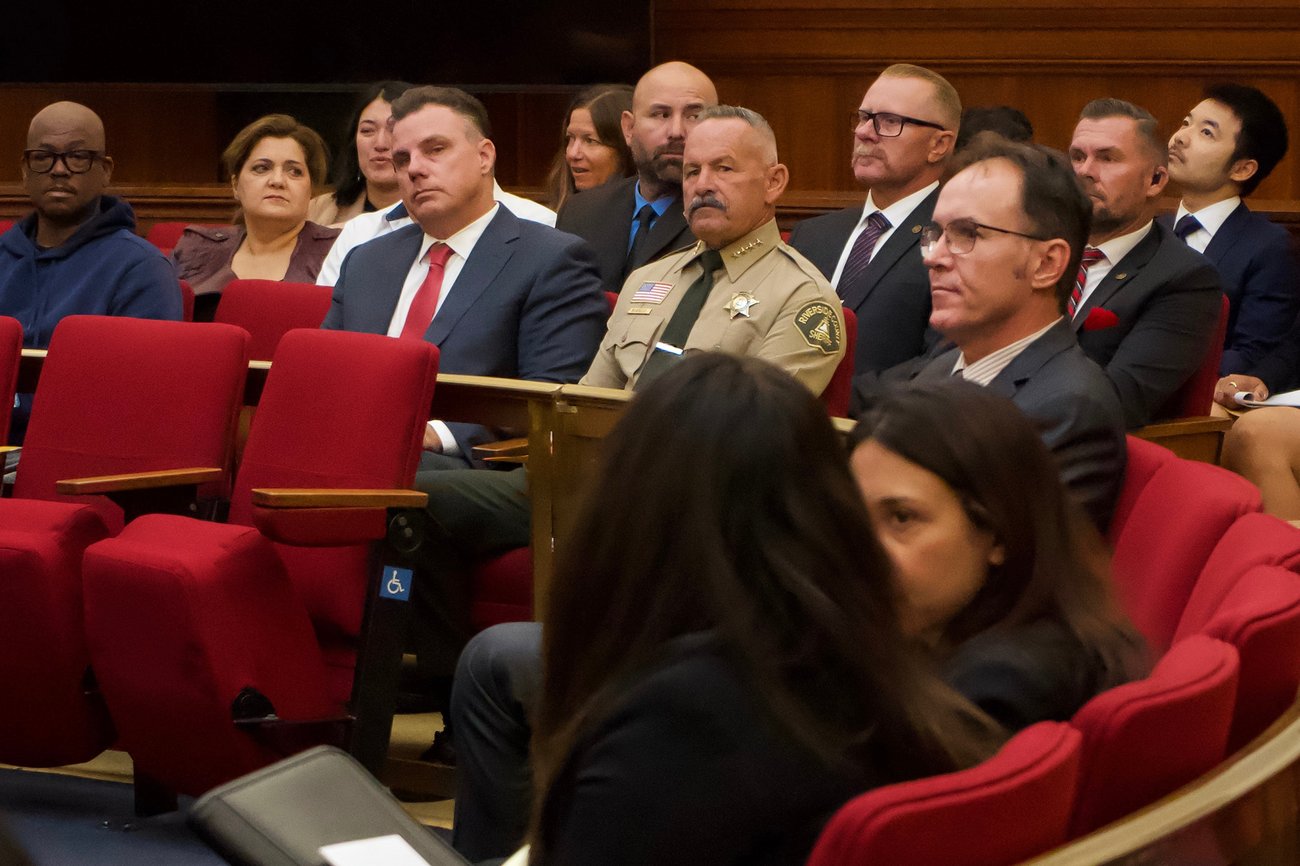
Riverside County Sheriff Chad Bianco, center, sits during a hearing at the California Supreme Court in San Francisco on Aug. 24, 2026, about his seizure and recount of more than half a million 2025 election ballots. Photo by Alicia Ramirez, The Riverside Record, Pool |
|
|
|
|
Good morning, CalMatters reader,
The California Supreme Court heard arguments Monday for whether the Riverside Sheriff’s Office should return the ballots cast in last November’s election to the Registrar's Office.
The ballots were seized under two search warrants signed by Riverside Superior Judge Jay Kiel. Copies of those warrants can be found here and here. Riverside Sheriff Chad Bianco intended to manually recount each ballot to determine if the number of ballots cast was close to the number of ballots counted. As a basis for probable cause, the warrants referenced a recount of ballots by a group of Riversiders that claimed 45,000 more ballots were counted than cast.
The ballot seizure was challenged by two lawsuits. Riverside Councilmember Clarissa Cervantes, Indio Councilmember Oscar Ortiz, Starting Over Strong Operations Director Nathan Kempe and Rebecca Robinson sued on March 25. They are represented by former California Attorney General and Democratic candidate for governor Xavier Becerra, through the UCLA Voting Rights Project.
Their suit claims violation of elections law that protects their ballots. The current California Attorney General, Rob Bonta, also sued, on the claim that Bianco flouted the “direct supervision” of county sheriffs that the California Attorney General has. Bonta had asked Bianco to send the evidence of election fraud his office had collected, and to pause the investigation until Bonta could review it. Instead, Bianco got a third warrant from Kiel that authorizes a recount under the court’s authority.
Bianco had started his recount before the California Supreme Court ordered a temporary stop until the justices heard arguments in both cases and issued a ruling.
At the three-hour hearing, the justices asked Bianco’s attorney, Brad Hertz of Hertz Law, where he based his legal theories.
“So (the law) says, ‘In no event shall the package or its contents be taken from the custody of the elections official, so I’m just not following your argument,” said Justice Leondra Kruger.
“It's a custodial handling of the specific ballots in the specific scenario. It's not undercutting or an implied repeal of the judicial warrant authority,” Hertz said.
In the hearing about the Attorney General’s supervisory powers, Justice Goodwin Liu asked Hertz what “the attorney general shall have direct supervision over every district attorney and sheriff” means.
“I think direct supervision over means the sheriff is like an elder statesman, someone who can say, ‘The other sheriffs do it this way, you’re not doing it the right way, I’m going to convince you the way you should do it,’ and if the sheriff ultimately says no, ‘I disagree,’ then the remedy of the attorney general is to go to court, Hertz said. |
|
|
|
|
Our nonprofit, nonpartisan newsroom depends on support from people like you. |
|
|
|
|
Chad Dunn, attorney for the Voting Rights Project, said that only the Riverside Civil Grand Jury, or the Riverside Board of Supervisors, can issue a recount. If either did, the ballots should have remained in the custody of the Registrar to avoid tampering.
Dunn said the case law was settled in 1892, when a San Francisco judge ordered the county registrar to reopen sealed ballots. The registrar refused, and was sent to jail. The California Supreme Court ruled in the registrar’s favor, finding that the integrity of the ballots have to be protected in the case there was a full election recount.
“That officer in Ex Parte Brown went to jail rather than to hand ballots over in response to a subpoena,” Dunn said. “That is the kind of code and duty that we expect of the registrar of voters to protect these ballots, and the legislature has never changed that law since then.”
Read more about the arguments from CalMatters’ Ben Christopher: California justices seem skeptical of Sheriff Chad Bianco’s defense in ballot seizure case or the Riverside Record: State Supreme Court hears arguments in Bianco election investigation cases. |
|
|
|
|
Did someone forward you this email? Sign up for The Inland Empire. |
|
|
|
|
And, for some in-person discussion, join CalMatters and the UCR School of Public Policy on September 24 in Riverside. We’ll be hosting a conversation about CalMatters’ investigation into the seizure of mail ballots and what it means for future elections. Join the conversation to learn about California’s election safeguards, proposed voting changes and the CalMatters Voter Guide. Register today. |
|
|
|
San Bernardino politicians head to the courthouse |
|
|
|
|
|
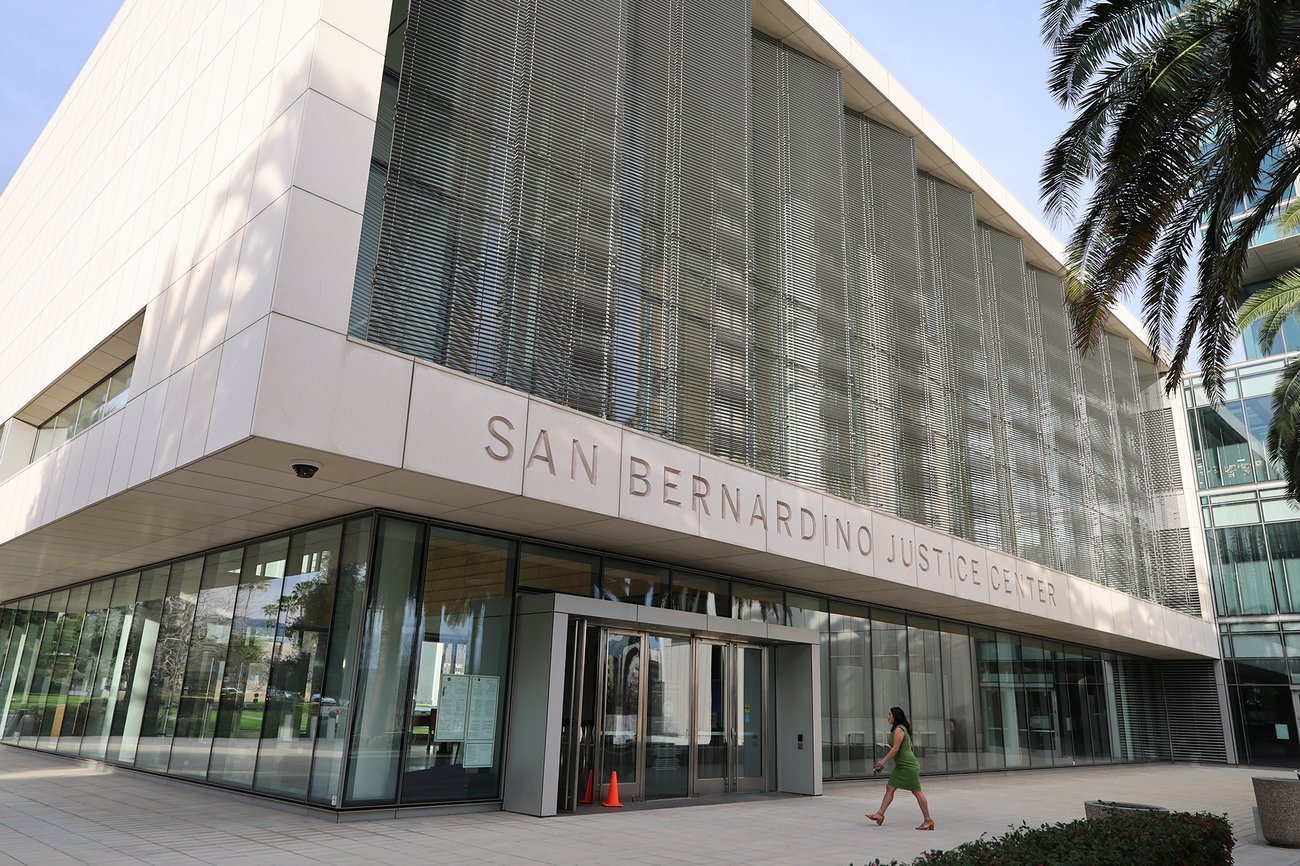
An exterior view of the San Bernardino Justice Center in San Bernardino on Feb. 5, 2026. Photo by Allen J. Schaben, Los Angeles Times via Getty Images |
|
|
|
|
Bianco and Cervantes weren’t the only ones in court this week. San Bernardino city councilmember Treasure Ortiz was on trial for two misdemeanor charges of illegally recording the city’s police chief, Darren Goodman, and police union president, Jose Loera.
In pretrial motions last week, it was revealed that Ortiz was an undercover informant for the FBI, the Sun reported. She was an informant between 2022 and early 2025, on a federal corruption investigation. The police officers she recorded were not part of the investigation, but stemmed from her own lawsuit against them.
Ortiz filed suit against the officers in November, alleging they illegally searched her name in a police database and misinterpreted a 911 call in 2006 from her to discredit her in the election. The officers deny the accusation, and the case is ongoing. Transcripts of her conversations with the officers are in her complaint.
Read The Sun’s reporting of opening arguments here: Jury hears conflicting theories as opening arguments kick off San Bernardino City Council member’s misdemeanor trial, and the testimony of Goodman here: Day 2 of San Bernardino City Council member’s trial marked by objections to questions posed to police chief.
That’s not the end of the legal saga in the IE this past week: San Bernardino’s Auditor-Controller/Treasurer/Tax Collector Ensen Mason was in the courthouse Friday challenging again the installation of his challenger, Rancho Cucamonga Councilmember Ryan Hutchison. He argues that Hutchison does not have the minimum qualifications for the position under state law, which requires specific financial experience and training. Mason argues he fulfills the requirements through serving on the Rancho Cucamonga city council, and his classes at Claremont McKenna College.
Hutchison won the election in March with 51.7% of the vote. Mason had challenged his appearance on the ballot, but San Bernardino Superior Judge Stephanie Tañada had ruled against him. She found that, even if Hutchison was unqualified by law, it was still up to the voters. A ruling in this case is expected within two weeks.
Read about Friday’s hearing from The Sun: Ensen Mason takes Ryan Hutchison to court over right to San Bernardino County auditor position. |
|
|
|
|
Advertisement |
 |
|
|
|
|
|
|
|
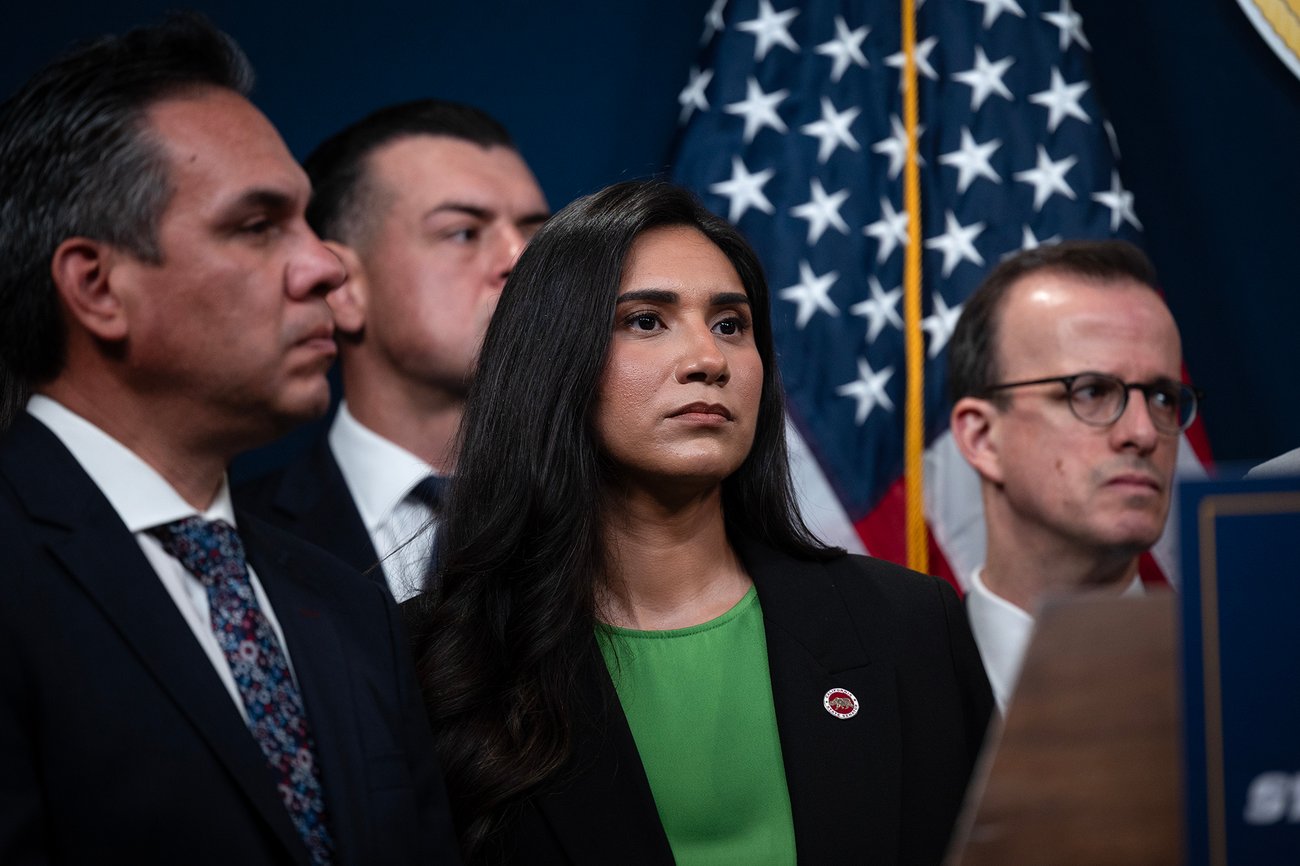
State Sen. Sabrina Cervantes addresses the media during a press conference with fellow California Democrats at the Capitol Annex Swing Space in Sacramento on Aug. 18, 2025. Photo by Miguel Gutierrez Jr., CalMatters |
|
|
|
|
Sen. Sabrina Cervantes, representing Riverside, edited a bill that would have required in-car breathalyzers for anyone convicted of a DUI. State law currently only requires the devices after repeat offenses.
Cervantes nixed that element as chair of the Senate Appropriations Committee, CalMatters’ Lauren Hepler and Robert Lewis reported. No public explanation of the change has been made, and Cervantes’ office did not respond to a request to comment.
“I am still trying myself to get to the bottom of it,” said the bill’s author, Assemblymember Cottie Petrie-Norris, an Orange County Democrat.
Kellie Montalvo, whose son Benjamin was killed by an impaired driver in Cervantes’ district in 2020, had been advocating for the change.
“It’s heartbreaking, and I try to tell myself not to lose hope,” Montalvo said. “I mean, California has got to do something. Our numbers are horrific.”
The bill still changes the state’s DUI law: a first-time DUI offender can suspend their license instead of maintaining a restricted license and a breathalyzer, and drug-only DUI convictions would have a separate framework than alcohol-related convictions. The requirement, however, was the bill’s primary point.
Read the full story: Lawmakers gut major DUI reform through ‘hostile amendments’.
|
|
|
|
|
|
|
|
|
|
Aidan McGloin
Inland Empire Reporter |
|
|
|
|
|