|
|
|
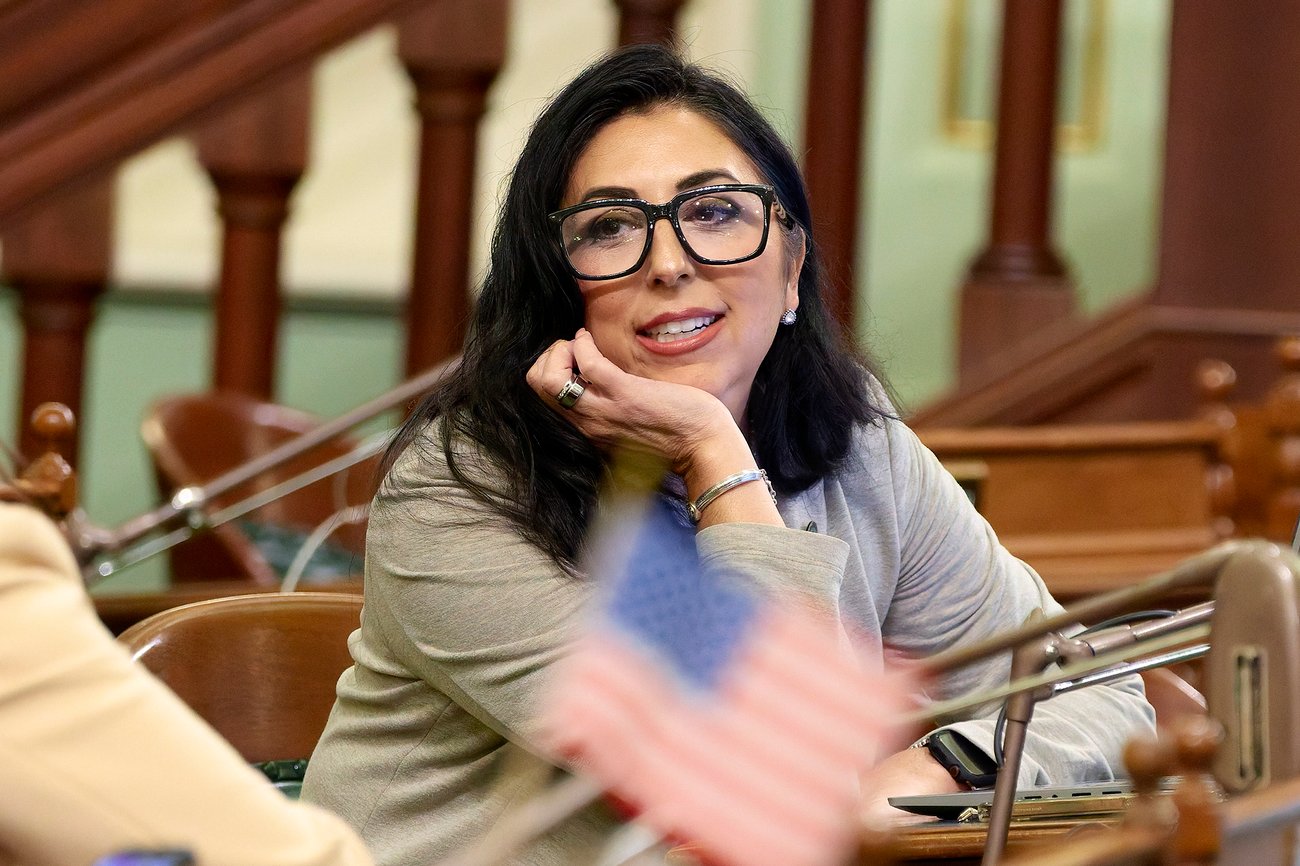
Assemblymember Natasha Johnson sits at her desk during a floor session at the state Capitol in Sacramento on Sept. 12, 2025. Photo by Fred Greaves for CalMatters |
|
|
|
|
Happy holidays to you and yours, CalMatters reader,
CalMatters will be taking next week off, so you won’t see me in your inbox on New Year’s Eve. I wish the best for you, and the Inland Empire, next year. This week, we're reporting on Lake Elsinore Assemblymember Natasha Johnson's quick transition into the legislature, the San Bernardino County Fire Protection District, Riverside Sheriff Chad Bianco's odds at the governor's office, and CARE Court.
Johnson has had a busy eight months. On April 2, she announced her candidacy for the seat vacated by Bill Essayli, the same day he accepted the appointment of Acting United States Attorney. After six months of campaigning, and with Essayli’s endorsement, she won the Aug. 26 special election against Chris Shoults, 34,866 votes to 30,322 votes.
Johnson was sworn in on September 8, the last week of the legislative session, when late night marathon meetings decided whether a bill would pass or die. To help the transition, Minority Leader James Gallagher lent Johnson his legislative director, and Kate Sanchez, who represents Temecula and Murrietta, sent her a staffer. |
|
|
|
|
Triple your impact: Back independent journalism today, including vital reporting on the Inland Empire. Every gift makes a difference.
|
|
|
|
|
She voted 573 times in that week, 167 times for bills, and 355 times against them, according to CalMatters’ Digital Democracy database. On Sept. 12, she gave her first and only speech to the floor, in support of Senate Bill 414, regarding charter school oversight while protestors for a Gaza ceasefire were yelling from the balcony.
For Johnson, charter schools are personal. Her son stopped progressing in his education until he began attending one outside of Lake Elsinore. Johnson was adamant that the state should cover the cost of the new regulations and programs that the bill would require.
“(These reforms) ensure, hear me, that we allow students, regardless of their learning environment, to receive the same fair funding as their peers in traditional schools. As an Assembly woman, I will always defend the ability for parents. I want to be clear. Charter schools are public schools. They serve 700,000 students across California. They deserve our respect and the same respect and resources and opportunities every other student in this state has,” Johnson said.
The bill narrowly passed the legislature but was vetoed by Gov. Gavin Newsom, who called for the issue to be revisited next year. |
|
|
|
|
Did someone forward you this email? Sign up for The Inland Empire. |
|
|
|
|
Since the legislature closed Sept. 12, she has been engaging with her constituents to determine what priorities and policies she should support. At the top of the list, due to the number of constituents asking about it, is charter schools, she said. Following that, in no particular order, are affordability, local control and safety.
Drawing on her experience as a three-time mayor of Lake Elsinore, she said that some of California’s designations, such as its home building requirements, don’t match local needs or geographical restrictions.
To improve affordability, she said there is no silver bullet, but that the state needs to promote jobs by being business friendly. She is concerned about the closure of oil refineries in the state, and its resulting impact on fuel prices.
For safety, she said the state should invest in more police, prosecutors and prisons to enforce the criminal changes brought by Proposition 36.
As she continues listening to her constituents, Johnson knows the clock is ticking as the legislature reconvenes Jan. 5. After a short break around the holidays, Johnson is excited to get back to work.
“I’m not starting from the ground floor after that crazy week at the end of the legislative year,” she said. |
|
|
|
San Bernardino County Fire Protection District is prepared
|
|
|
|
|
|
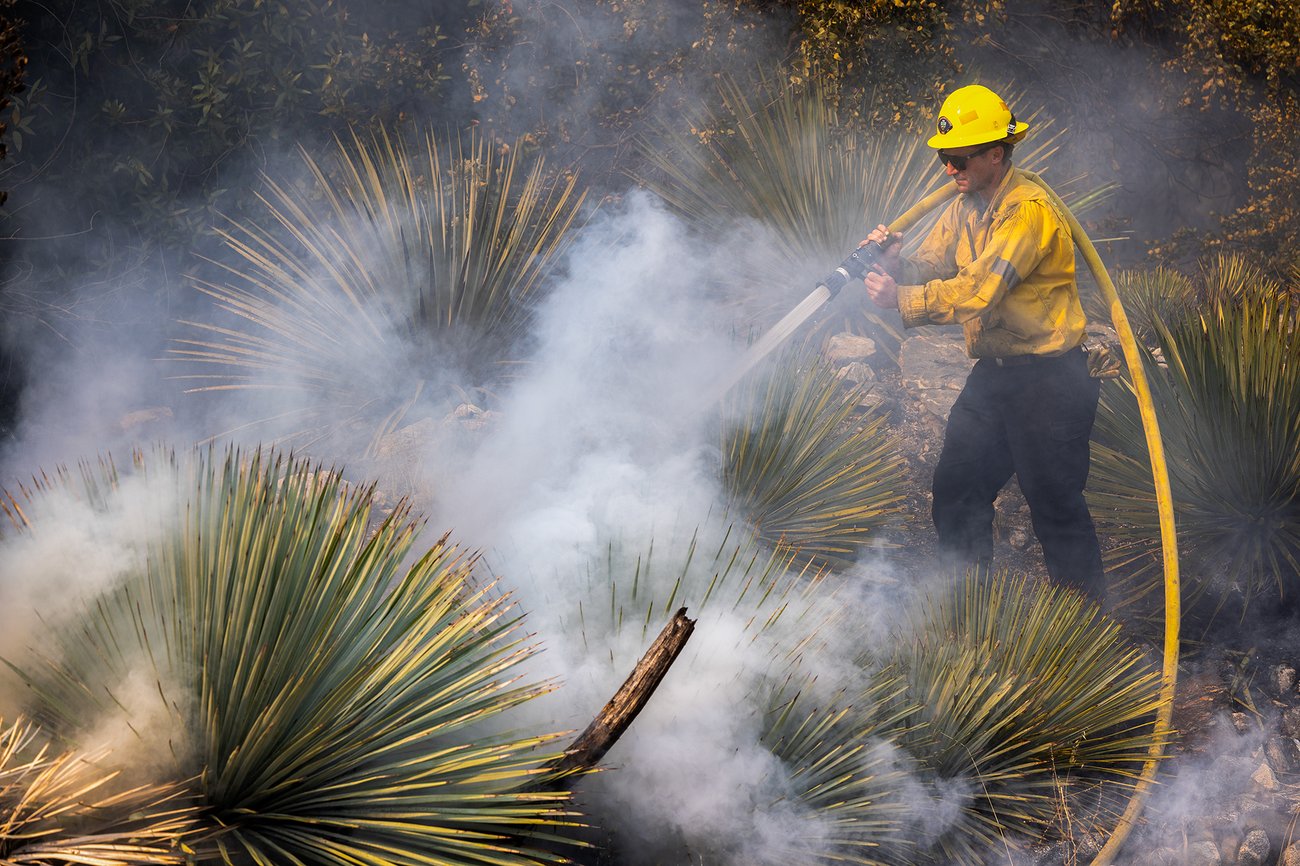
firefighter steps between the needle-sharp points of chaparral yuccas while hosing down flames on the day after the Bridge Fire at Mount Baldy in San Bernardino County on Sept. 11, 2024. Photo by David McNew, Getty Images |
|
|
|
|
The county’s firefighter department is well prepared for emergencies, according to a Dec. 12 report from the San Bernardino Civil Grand Jury. The grand jury investigated the San Bernardino County Fire Protection District (SBCFPD) after the Eaton Fire devastated Altadena in January 2025. Their conclusion: “They are ready!”
The 1,060-person strong SBCFPD is responsible for fighting fires across 19,200 square miles of San Bernardino County, including all unincorporated areas, the city of San Bernardino and 23 other cities. From July until November, they responded to 54,461 calls, including 106 rescues, 419 structure fires, and 752 vegetation fires. The civil grand jury is a group of civilians given authority to investigate county management.
They lauded the SBCFPD’s fledgling drone respondent program, its staffing, and its support from the Board of Supervisors.
“San Bernardino County is a tinderbox. Its mountains, deserts, scrublands, urban and suburban neighborhoods render it particularly susceptible to wildfires and structure blazes. FEMA’s Fire Risk Analysis rates San Bernardino County as the third most hazardous county in the country,” the report said.
“San Bernardino County also has quality and dedicated personnel, an innovative technological approach to firefighting and a Board of Supervisors that supports the county’s Fire Protection District. San Bernardino is prepared to respond to events and to confront and overcome the risks.”
The grand jury recommended the SBCFPD consolidate its maintenance yards and parts warehouse and increase incentives to retain firefighters. It also recommended that the Board of Supervisors provide funding to fully staff the SBCFPD’s drone respondent program and staff four firefighters per engine instead of three. Its last recommendation was to have the Board of Supervisors require regular reports from independent water districts to ensure public water hydrants are ready.
“There is no SBC official or department with ultimate authority and responsibility to ensure that the public water hydrants are kept in a ready state of operation and that statutorily mandated standards as to distance, flow and connection capabilities are followed,” the report said.
SBCFPD Fire Chief Dan Munsey told the San Bernardino County Transportation Authority on Dec. 3 that his district has been successful by focusing on planning, partnership and innovation.
“We don’t have a wildfire crisis.We have a land management crisis. And if we aren’t managing our wildland, whether it’s in the federal, state, incorporated or unincorporated, we are going to have fires that we can’t control. Most of my peers would get in front of you and say, ‘I need more fire engines. I need more firefighters. I need bulldozers, and I need aircraft. That’s how I will put these fires out.’ I will remind everything here that my job, my primary purpose, is to prevent the bad stuff from happening,” Munsey said. |
|
|
|
|
Advertisement |
 |
|
|
|
|
|
|
|
|
Democratic candidates for governor during a candidates' event hosted by the California Federation of Labor Unions, AFL-CIO and the State Building and Construction Trades Council at the Sheraton Grand Hotel in Sacramento on May 12, 2025. The candidates in attendance were Katie Porter, Eleni Kounalakis, Toni Atkins, Antonio Villaraigosa, Betty Yee, Xavier Becerra, and Tony Thurmond. Photo by Fred Greaves for CalMatters |
|
|
|
|
This week, Dan Walters wrote on Riverside Sheriff Chad Bianco’s chances at winning the governor’s race. His odds are better than you would think in the blue state:
“The possibility of a Republican governor, although very scant, stems from the state’s top-two primary election system. All candidates, regardless of party, will appear on the same June 2 primary election ballot, and the two with the highest percentages of the vote — no matter how small those shares may be — will face each other in the November election.”
Read it at CalMatters: California’s very odd election year starts with Republicans possibly leading the governor’s race |
|
|
|
|
|
|
|
|
C.M., who prefers to not use her full name, sits in her bedroom at a transitional home provided through CARE Court after receiving treatment for schizophrenia in Oakland on Dec. 1, 2025. She now lives in a single-occupancy room and is preparing to begin classes at Chabot College in January. Photo by Florence Middleton for CalMatters/Catchlight |
|
|
|
|
If you’re off work, or yearning for more CalMatters content when we’re off next week, you should take some time to read CalMatters’ seven-part investigation into California’s mandatory treatment program for people with mental disorders.
CalMatters journalists Marisa Kendall, Jocelyn Wiener, Erica Yee and Yue Stella Yu spent much of 2025 reporting on how CARE Court is working – and how it’s not. They interviewed dozens of participants, collected data and traced the legislative changes that limited CARE Court’s reach. The result is the most-comprehensive statewide picture yet of CARE Court, who it can help, and who is still falling through the cracks.
Start at the introduction: Courting Disappointment.
Thanks for reading. While you are here, please sign up for the Inland Empire newsletter and let me know what kinds of stories you’d love to read. Please add my email to your contacts: inlandempire@calmatters.org, and forward our email. |
|
|
|
|
|
|
|
|
|
Aidan McGloin
Inland Empire Reporter |
|
|
|
|
|