|
|
|
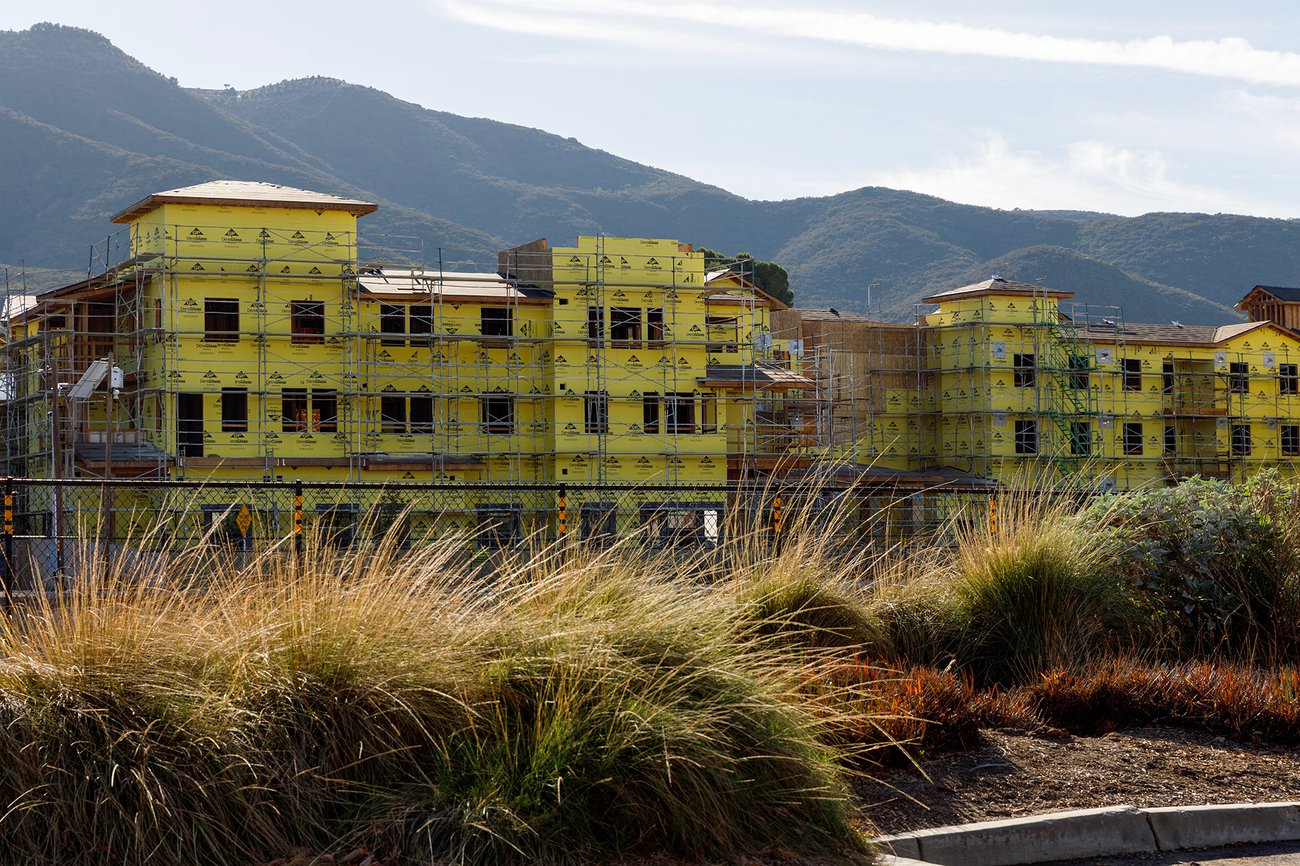
An apartment complex under construction in Temecula on Oct. 11, 2024. Photo by Kristian Carreon for CalMatters |
|
|
|
|
Dear CalMatters reader,
The Southern California Association of Governments (SCAG) published their annual community survey in October, bringing a snapshot of housing and commuting across San Bernardino, Riverside, Orange County, Los Angeles and Imperial Counties.
The report’s conclusions: we need more childcare, more family-friendly workplace policies and more housing.
Seventy percent of children live in a household where both parents work, requiring these families to pay for childcare.
The construction of new housing has not continued to match demand, said Kevin Kane, SCAG program manager for demographics and housing policy. He pointed to the region’s overcrowding rates, a figure he says is representative of supply not meeting demand, and of people jamming into homes to save on rent.
Overcrowding is defined as more than one person per room in a household. Nine percent of homes are considered overcrowded in San Bernardino County, compared to 8% in Riverside, 10.5% in Los Angeles County, 10% across the SCAG region, 7% in California, and only 3.5% across the country. |
|
|
|
|
Our nonprofit, nonpartisan newsroom depends on support from people like you. |
|
|
|
|
Despite overcrowding, the percentage of households that spend more than 30% of their income on housing costs has slightly declined since 2006. This mirrors a national trend, according to the report. Forty-one percent of households in Riverside and San Bernardino Counties, 43% across the entire SCAG region, and 32% across the nation spend more than 30% of their income on rent. In 2006, the number was closer to 47% in the SCAG region.
The report shows that work-from-home has stabilized, with 10.3% of workers in San Bernardino, 11.5% in Riverside, and 14% from the entire SCAG region working from home in 2024.
That is a jump from before COVID: in 2019, only 6% of employees worked from home. Only 2.7% of workers took transit in 2024, a decrease from 3.8% in 2019, and from 4.9% in 2006, when SCAG began collecting the information.
Home ownership rates have not changed much in recent years. Riverside County has the highest home ownership rate in the SCAG region, with 68% of home ownership compared to 63% in San Bernardino County, 46% in Los Angeles County, 53% across SCAG and 65% across the entire nation.
|
|
|
|
|
Did someone forward you this email? Sign up for The Inland Empire. |
|
|
|
|
College education rates are also rising, both locally and nationally. Twenty-four percent of people over 25-years-old in San Bernardino have a bachelor’s degree, compared to 26% in Riverside, 35% in the SCAG region, 40% across California and 39% across the country. In 2006, those numbers were 17% in San Bernardino, 19% in Riverside, 27% in the SCAG region, 31% across California and 27% across the country.
SCAG, a metropolitan planning organization, is governed by representatives of cities throughout the counties. Its goal with the data is to provide for informed policy decisions in response to the commuting, education and housing needs of the region.
“Freeways don’t end at county borders. Labor markets don’t end at county borders. Your housing search radius doesn’t end at a county border,” said Kane.
The full 23-page report is available here. |
|
|
|
Elections across the state are already heating up.
|
|
|
|
|
|
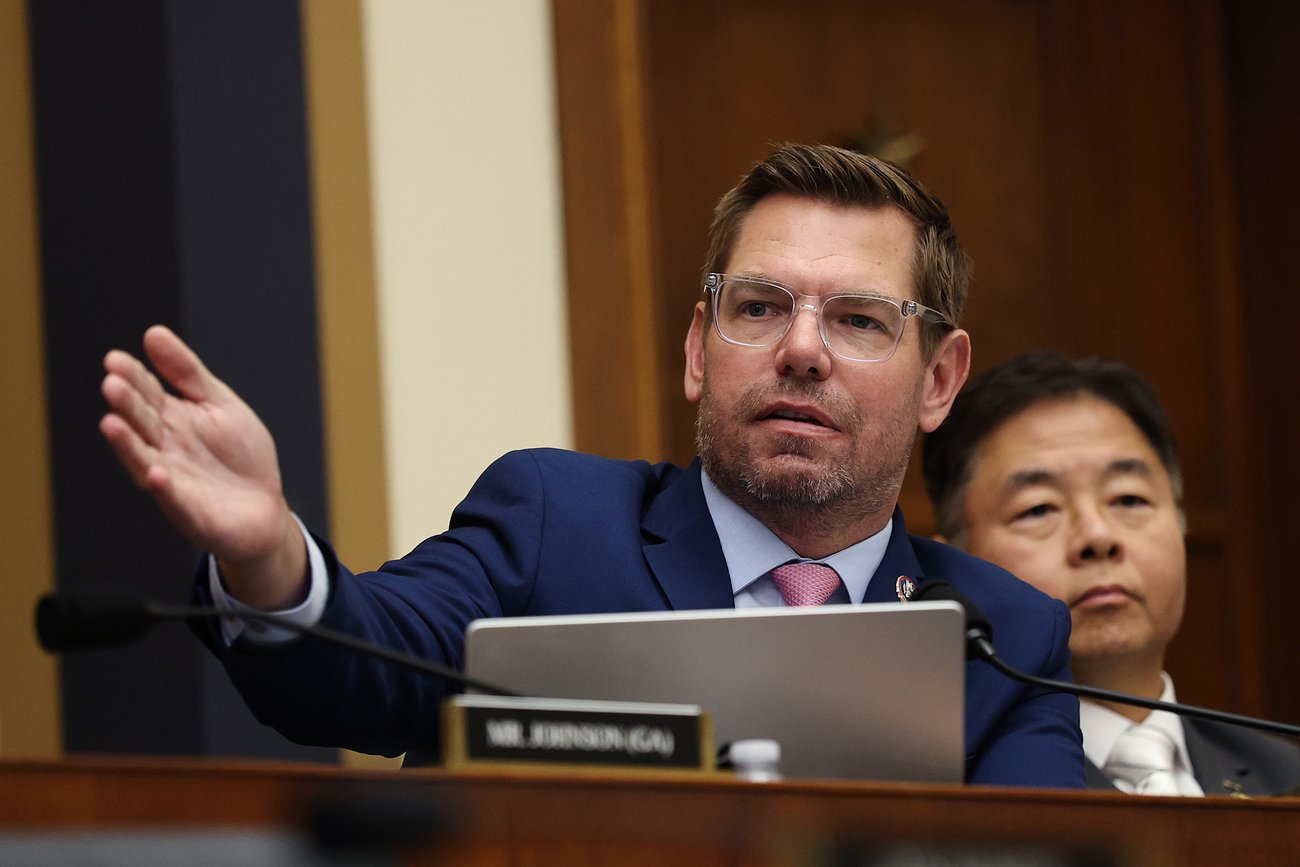
U.S. Rep. Eric Swalwell (D-CA) speaks during a House Judiciary Committee hearing with Federal Bureau of Investigation Director Kash Patel in the Rayburn House Office Building in Washington, DC, on Sept. 17, 2025. Photo by Win McNamee, Getty Images |
|
|
|
|
The Raincross Gazette came out with their election guide to the June 2026 primary last week.
Four Riversiders are competing for Ward 2, vacated by Councilmember Clarissa Cervantes when she launched a bid for the State Assembly. Two candidates are challenging incumbent Ward 4 Councilmember Chuck Conder.
And in Ward 6, two are competing for the seat Councilmember Jim Perry has announced he will not seek reelection for.
In Congressional news, 11 Democrats have filed to compete against Rep. Darrell Issa (R-Bonsall) in the new districts drawn by Proposition 50, Deborah Brennan reported. Those challengers include an attorney, a school board member, an entrepreneur and a bartender from the Coachella Valley.
As far as the federal lawsuit against Proposition 50 goes, a hearing for a preliminary injunction against the maps is scheduled for Dec. 15. The hearing is just four days before candidates can begin to gather signatures to qualify as a candidate.
As far as the election for the governor goes, billionaire Tom Steyer joined the race on Nov. 19, Maya C. Miller reported. Bay Area Rep. Eric Swalwell (D-Livermore), a former presidential candidate, announced his candidacy during an interview with Jimmy Kimmel on Nov. 20.
On Nov. 24, the Press Enterprise reported Harvest Rock Church pastor Ché Ahn of Pasadena announced his candidacy. Ahn had sued California over COVID lockdowns.
|
|
|
|
|
Advertisement |
 |
|
|
|
Local discussion of Native American Heritage Month
|
|
|
|
|
|
Woven baskets at the Native American exhibit at the Oakland Museum of California in Oakland on Feb. 14, 2024. Photo by Shae Hammond, Bay Area News Group |
|
|
|
|
On Monday, CalMatters published an opinion piece from Jeannine Pedersen-Guzmán, tribal archives, collections, and repatriation manager for the Yuhaaviatam of San Manuel Nation. Pedersen-Guzmán wrote about the storage of native remains in universities and museums across the state, a long-standing issue recently addressed by Assemblymember James Ramos (D-Highland)’s legislation, as this newsletter reported.
Pedersen-Guzmán wrote:
Each tribe has different views: Some are okay with display and research; others are not. Some items can be used for teaching; others cannot. It is about pausing to ask, listen and ideally work together.
Tribes are saying: “Nothing about us, without us.” They want to tell their own stories but are also willing to collaborate. It is here that knowledge can be transformed.
Responding to the concerns about native remains, Cal State University San Bernardino announced the hiring of Alex Armendariz as Director of Tribal Relations on Nov. 20. His duties include managing university compliance with the state and federal grave protections acts and being the lead for matters involving Native American collections, along with building relations with tribal governments and supporting Native students.
Pedersen-Guzmán’s commentary is one of two published by CalMatters in respect of Native American Heritage Month. A second, written by Kerri Malloy, assistant professor at San José State University and a member of the Yurok Tribe, criticized statements by both Gov. Gavin Newsom and President Donald Trump as being disrespectful of Native American sovereignty. |
|
|
|
Holiday celebrations begin
|
|
|
|
|
|
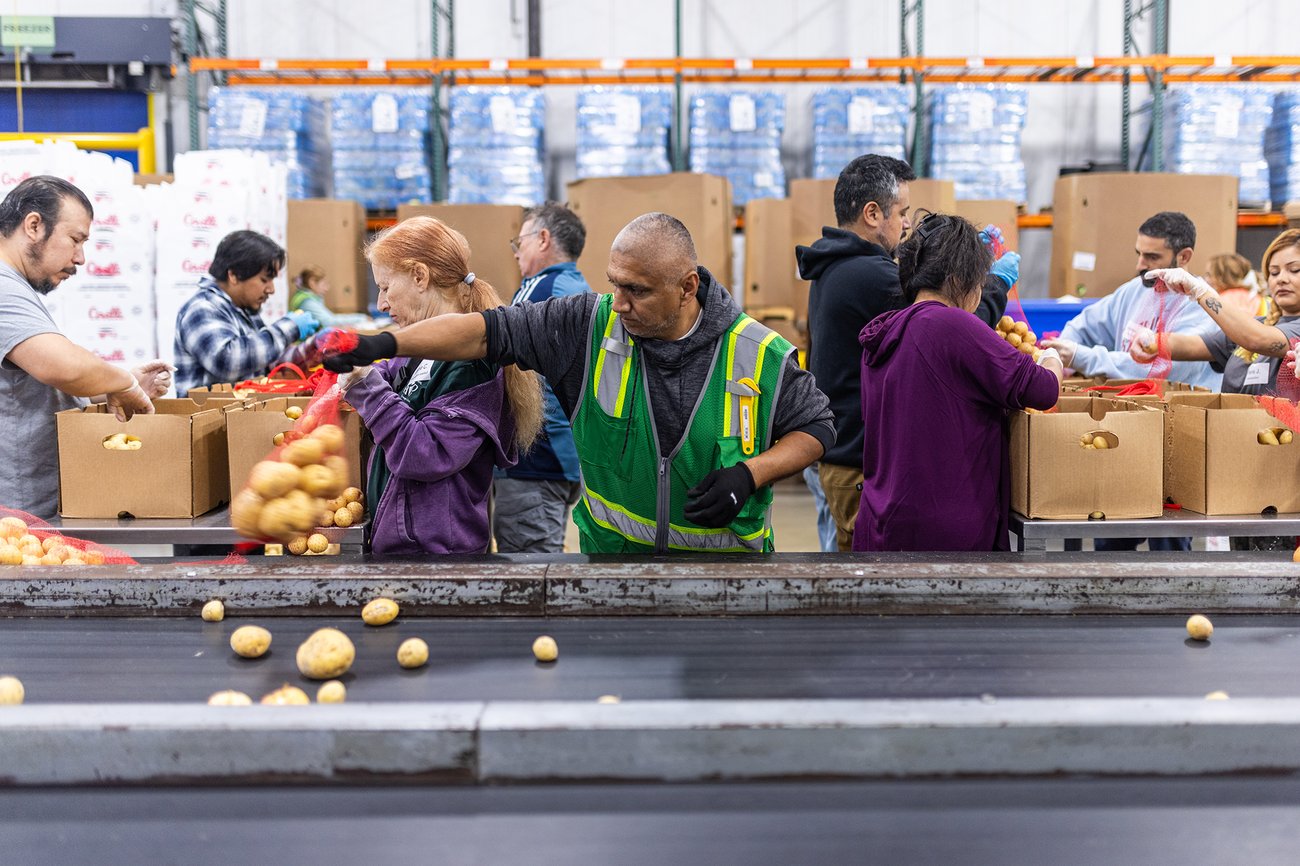
Workers, volunteers and National Guard troops sort fresh produce at Los Angeles Regional Food Bank in preparation for the end of SNAP benefits, in Los Angeles on Oct. 30, 2025. Photo by J.W. Hendricks for CalMatters |
|
|
|
|
The holiday season is here in full swing. Chino and Chino Hills will light their Christmas trees on Dec. 6, the Chino Champion reported. Redlands’ Burrage Mansion will host its sixth annual drive-through light show, A Burrage Christmas, on Dec. 14, Community Forward Redlands reported.
The Festival of Lights is on at the Mission Inn, from Nov. 22 until Jan. 22. The historic hotel set up approximately 11 million lights this year, Fox LA reported. In addition to the light show, the hotel brought in more amusement rides and an ice skating rink. Rumors were swirling that the Mission Inn was being marketed for sale at an $85 million price-tag following the death of owner Duane Roberts. As soon as his widow, Kelly Roberts, heard the rumors, she denied them, The Raincross Gazette reported.
Away from the festivities, and toward the season of giving, the Riverside Record reported on the operations of a food bank with 250 distribution sites throughout the Inland Empire. Feeding America Riverside and San Bernardino Counties provides 30 million meals to residents every year, they reported. Sen. Rosilicie Ochoa Bogh (R-Redlands) is hosting a food drive from Nov. 17 until Nov. 21. She asks for no-perishable foods to be dropped off at her office, at 1758 Orange Tree Lane, Suite B, Redlands.
You should forward our email. |
|
|
|
|
|
|
|
|
|
Aidan McGloin
Inland Empire Reporter |
|
|
|
|
|