Share
Suspense in governor’s race as Democrats hold on to their ballots

California Democrats are returning ballots at a slower pace than Republicans in the 2026 governor's race. Polls show Becerra, Hilton and Steyer in the lead.
WhatMatters
Your guide to California policy and politics
Presented by Empower Fans, Not Monopolies, Wildfire Solutions California, Californians for Government Accountability and California Association of Health Facilities

Icon
We depend on readers like you to support our nonprofit, nonpartisan state newsroom through donations.
Give now

Good morning, California.

Suspense in governor’s race as Democrats hold on to their ballots

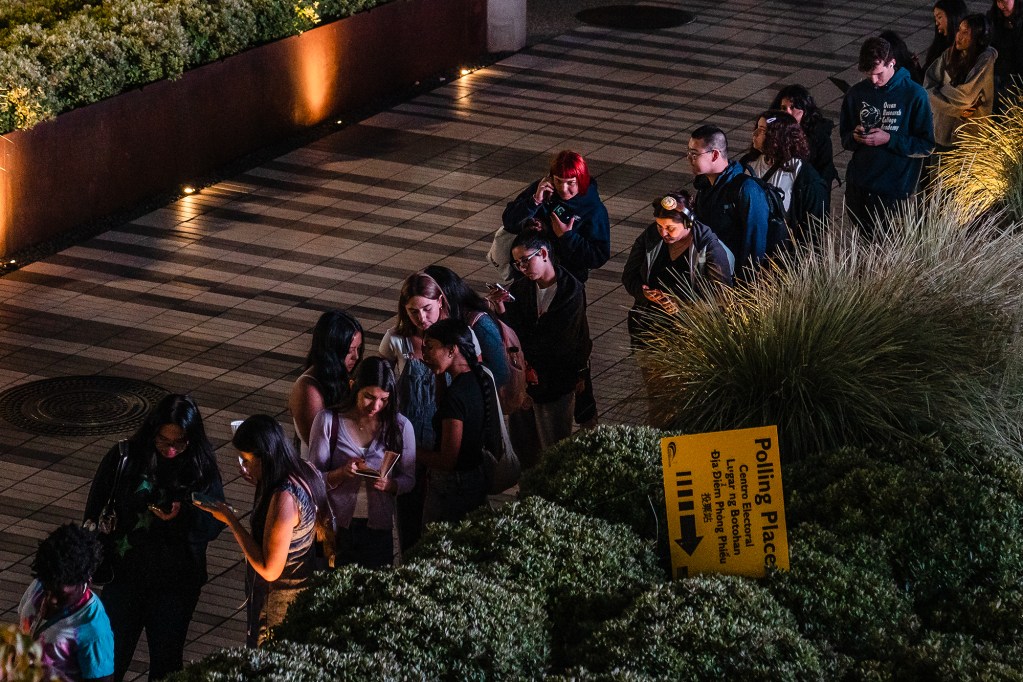
Students wait in line to vote at the Price Center at UC San Diego in San Diego on Nov. 4, 2025. Photo by Ariana Drehsler for CalMatters

The latest polls suggest it’s a three-way competition for the top-two spots in the California governor’s race, and a big reason that we don’t have a clear sense of who’s ahead is that many Democratic voters are waiting until the last minute to choose a candidate.

In roughly 24 hours, voters across the state will finish deciding whose names will appear on the November ballot to lead California for the next four years.

Three nonpartisan polls released last week showed Democrat Xavier Becerra ahead, with Republican Steve Hilton and Democrat Tom Steyer neck-and-neck for the second spot.

Millions have already submitted their ballots before Election Day, but like previous gubernatorial primary elections, turnout has been relatively low compared to general elections: As of Sunday, only 15.10% of all ballots have been submitted, according to the voter data firm Political Data Inc. That’s a similar rate during the June 2022 primary, when 14.53% of ballots were returned three days before Election Day.

The 0.57 percentage point difference may not sound like much, but dig a bit deeper and the data reveals that Democratic voters are turning in their ballots slower than they did in 2022: 15% of Democratic ballots have been returned to date, compared to 17% four years ago. Meanwhile, a higher percentage of Republicans have returned their ballots, with 19% of GOP ballots submitted compared to 17% in 2022.

Paul Mitchell, vice president of PDI, told me three factors likely explain why GOP voters are turning in ballots more quickly. One is that Republicans only have to choose between two candidates, whereas there are six leading Democratic candidates. Republicans also have historically voted early by mail — a practice they appear to be reverting back to after President Donald Trump discouraged them from doing so in 2020. 

But older white Democrats are showing the biggest lag, and are either waiting to cast their ballots or have yet to decide who they’re voting for, said Mitchell. California’s top-two primary system enables two candidates of the same party to potentially land on the November ballot, so some liberal voters want to ensure they can advance at least one Democratic hopeful.

  • Mitchell: “All the stories about two Republicans making the runoff, they might be calculating their vote to make sure that they’re voting in a way that is strategic to make sure that a Democrat gets onto the general election.”

Kevin Callan, also at PDI, added that while some Democrats might not feel strongly about any of the leading candidates, they still understand the possible long-term implications of their June vote.

  • Callan: “Democrat voters know that whichever Democrat candidate makes it into the runoff will be our next governor. That adds more weight to their decision.”

Advertisement

CalMatters’ 2026 Voter Guide is here to help. We break down key races, tell you who’s bankrolling each campaign, help you register to vote and give you all the other information you’ll need to make your vote count. Check it out.

Advertisement

Missed warning signs at chemical plant

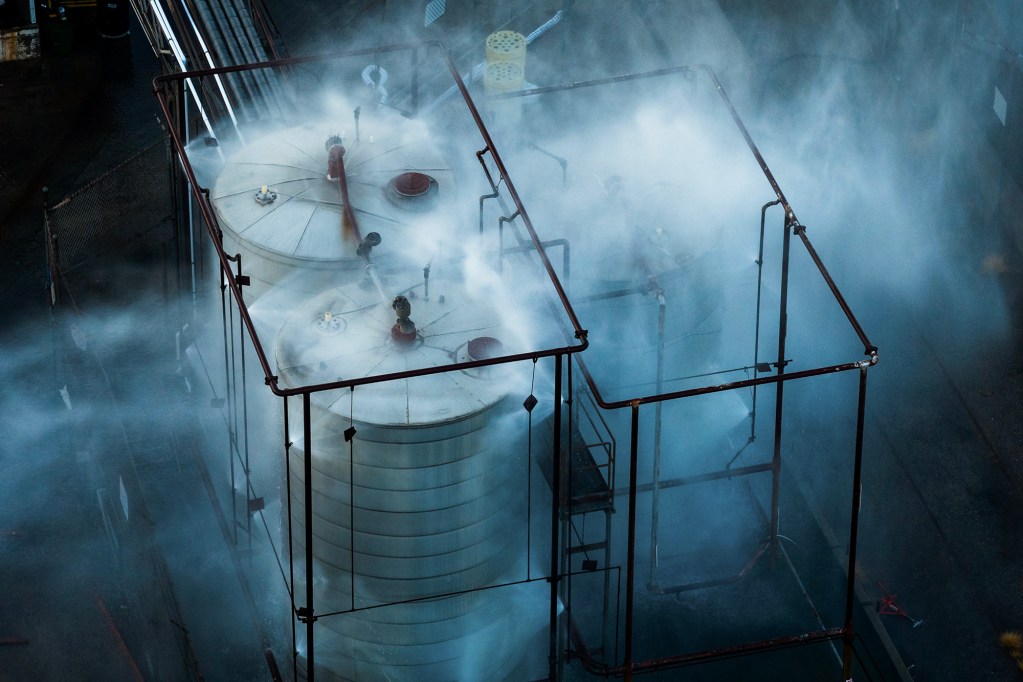
Water is sprayed on a tank that overheated at GKN Aerospace in Garden Grove on May 22, 2026. Photo by Ethan Swope, AP Photo

Fire crews worked around the clock last week to eliminate the threat of a major chemical explosion at GKN Aerospace in Orange County, which forced 50,000 residents to evacuate from their homes. But with the threat of catastrophe over, questions remain about how the situation could have been prevented.

As CalMatters’ Alejandra Reyes-Velarde and Alejandro Lazo explain, local air regulators weren’t required to inspect the GKN facility frequently. That limited oversight may have contributed to what records show was a yearslong compliance problem.

The chemical at the center of the crisis — methyl methacrylate — is also not subject to regulation under federal or state authorities. That could mean the damaged tank leaking chemical vapors was overseen under an alternate hazardous-materials program, which would leave regulators with fewer tools to manage its storage. 

Angela Johnson Meszaros, an attorney for Earthjustice, said residents who live near facilities such as GKN likely assume someone is enforcing the rules. But that may not be the case when regulatory systems prioritize “getting facilities to return to compliance,” over safety.

  • Meszaros: “We need to have a system that’s about making sure facilities are operating in a way that is safe — and some facilities may not have a culture that allows us to put our lives into their hands.”

Trump downplays good news on homelessness

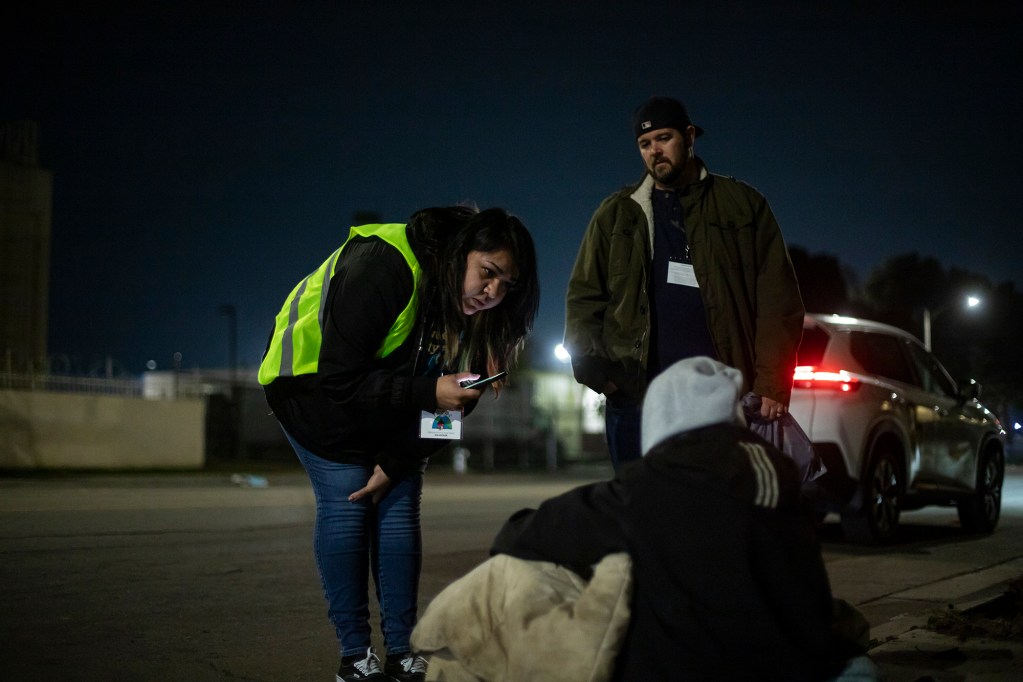
Counters speak with an unhoused person during a point-in-time count in Fresno on Jan. 27, 2026. Photo by Larry Valenzuela, CalMatters

Homelessness advocates are citing the latest federal report on homelessness — which shows the first decrease in the number of unhoused people in a decade — as evidence that current policies are working, despite the Trump administration’s contending that they’re not, reports CalMatters’ Marisa Kendall.

After a five-month delay, the U.S. Department of Housing and Urban Development released its annual report to Congress Friday. California reported 181,934 unhoused people last year, a 2.8% decrease from 2024. Nationwide, an estimated 745,652 people are homeless, which is a 3.3% drop from the year before.

Jesse Rabinowitz, a spokesperson for the National Homelessness Law Center, said in a statement that the decrease occurred while former President Joe Biden was still in office, funding “things that we know work, like housing and support.”

But the federal government tied the drop to immigration, saying that it was “attributable to decreases in sanctuary cities.” It also focused instead on the fact that homelessness has increased 27% nationwide since 2013, when the country employed a “housing first” policy that prioritized providing unhoused people a place to live, even if they use drugs or alcohol.

And lastly: Big oil gains in cap-and-invest change?

An oil refinery in Carson on May 29, 2024. Photo by Damian Dovarganes, AP Photo

Gov. Gavin Newsom is praising changes to California’s cap-and-invest program, which state regulators recently approved, to help keep refineries operating in California. But the changes could potentially steer billions of dollars in free pollution permits to oil companies, which has some environmentalists characterizing the changes as “deeply misguided.” Read more from Alejandro.

Advertisement

California Voices

CalMatters contributor George B. Sánchez-Tello: A Los Angeles group calling themselves “godmothers of the disappeared” has been providing a calm, intimate form of activism against federal immigration raids that contrasts with the surrounding chaos.

Advertisement

Other things worth your time:

Some stories may require a subscription to read.

It’s getting easier to buy a house — but not in SF. // San Francisco Chronicle

Is life really better in Tennessee? What happened to Californians who moved to the Southeast. // Los Angeles Times

What did Karen Bass mean when she talked about the destruction of Koreatown liquor stores in the 1992 riots? // L.A. Local

‘Wake-up call’ for chemical risks: Nearly 2M Californians live near a facility like the one that nearly exploded in Orange County. // The Orange County Register

What’s in it for Sacramento? A look at what the Sacramento region expects to get from a billion dollar investment in Major League Baseball. // Abridged

A changing of the guard in South L.A.: Latino candidates appear ready to rise in a city council district associated with Black leadership. // L.A. Material

How are tech billionaires spending their cash in CA’s elections? // The Guardian

The fossil fuel primary: Why Chevron and PG&E are spending so much to boost Becerra. // The San Francisco Standard

‘Like an angel’: Meet the helpers working in Bay Area immigration court. // KQED

Worry about ICE expansion: Protestors in Santa Clara County rally against a planned detention center in Gilroy. // The Mercury News

See you next time!
Tips, insight or feedback? Email whatmatters@calmatters.org.
Subscribe to CalMatters newsletters here.
Follow CalMatters on Facebook and Twitter.
Email Marketing by ActiveCampaign