EV factory opens in Riverside |
|
|
|
|
|
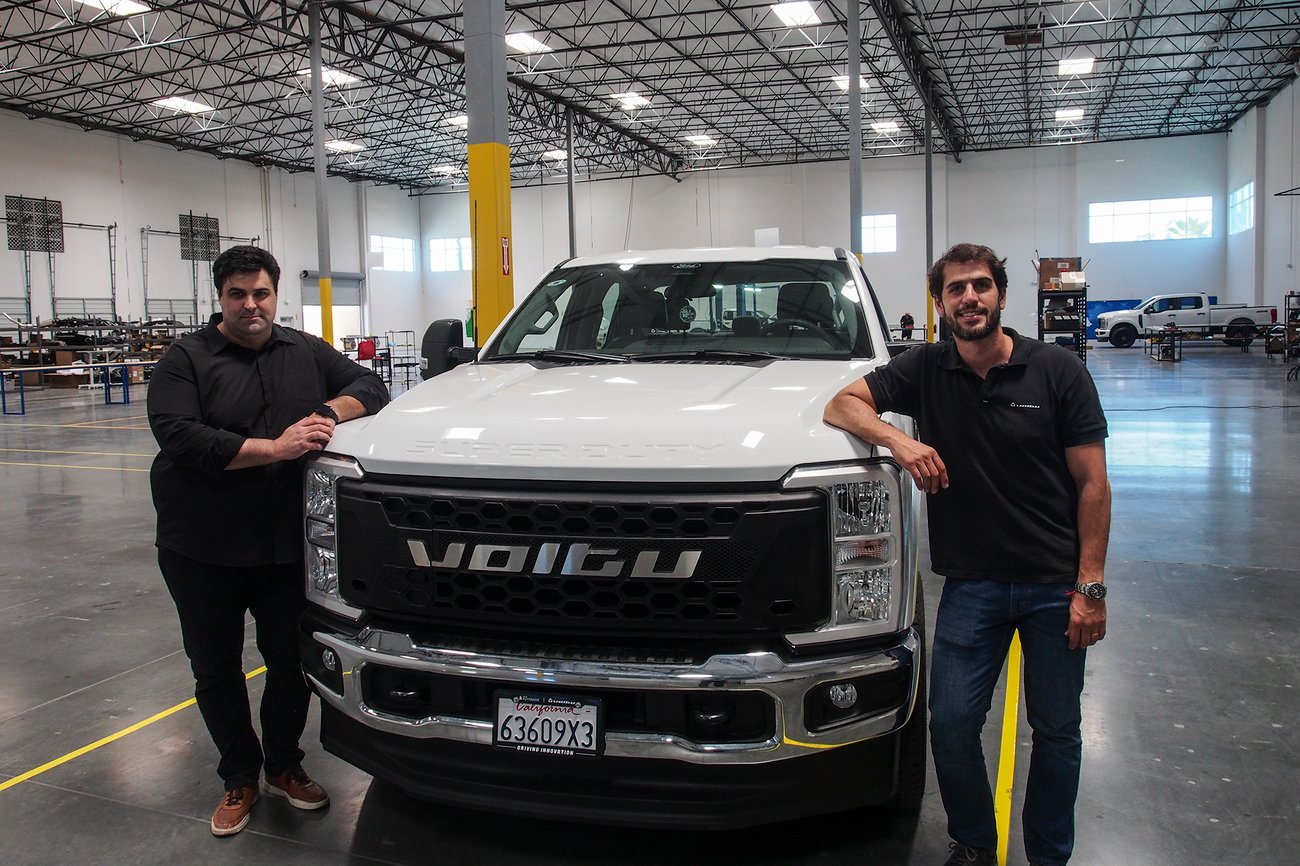
From left, Voltu President George Gebhart and Chief Commercial Officer Juan Artola at the company’s factory near Sycamore Canyon Park in Riverside on June 23, 2026. Photo by Aidan McGloin, CalMatters |
|
|
|
|
Voltu Motor, a 15-year-old company founded by a former Argentinian professor, began producing all-electric heavy duty pickup trucks in Riverside last month.
The company produces its powertrain system and assambles it on a Ford chassis in its 400,000 sq-ft factory off of Eastridge Ave., Riverside, south of Box Springs Mountain Reserve.
Voltu CEO George Gebhart said the company made the decision to open shop in Southern California, due to the large market and its reputation as the logistics hub of the nation. The company chose Riverside out of other Southern California cities after talking with different government entities and institutions.
“They pointed out that something was happening in Riverside that we should explore,” Gebhart said.
Gebhart talked with the University of California, Riverside, where university employees helped the company navigate California’s regulations and certifications, collaborates on student training programs, and plans to conduct research on EVs. Riverside city council’s EV-forward initiatives, including their move to replace city-owned vehicles with EVs, also encouraged him to set up shop in the city.
“There was a point where we just clicked with each other,” Gebhart said.
The city became the company’s first buyer, pre-ordering 20 heavy duty pickups at the cost of $2.4 million, split evenly by the city’s General Services and Riverside Public Utilities.
“Voltu represents exactly the type of innovative company Riverside is committed to attracting and supporting as we continue building one of California’s leading green technology ecosystems,” Riverside Mayor Patricia Lock Dawson said in a press release.
|
|
|
|
|
Our nonprofit, nonpartisan newsroom depends on support from people like you. |
|
|
|
|
Voltu developed a patent for a fluid battery cooling system that allows the battery to be more compact. The smaller battery can sit inside the Ford F-350 chassis rather than on top of it, allowing the truck better towing capacity and the ability to handle heavier loads. It also allows the company to outsource its chassis design and production.
Voltu Motor also developed an internal charging adaptor using the principles underlying regenerative braking and cutting the cost of charges from $100,000 to $10,000.
Voltu also developed an internal charging system that cuts out the need for the typical $100,000 AC/DC adaptor used by EVs. The company essentially placed their own adaptor in the truck, using the same principles that allow other EVs to recharge their batteries while breaking. The trucks take 40 minutes to charge, the same as competitors, but each charger only costs $10,000. In case of the truck needing to charge outside the workyard, a second port allows for charging from the regular EV chargers scattered throughout the area. |
|
|
|
|
Did someone forward you this email? Sign up for The Inland Empire. |
|
|
|
|
Their final selling point: they reduced the amount of computers in the truck from the typical 27 to three, to make repairs easier.
“We think of it as more of a technological company,” said Gebhart.
Clients have preordered 100 trucks already, a demand the company intends to meet over the year. They want to speed up production to 1,000 trucks next year. To get there, they need to hire 40 additional employees in addition to their existing 20.
The company has set up a five-week certified workforce development training program, in collaboration with UCR, California Baptist University and local community colleges. The program will be entering its fourth cohort, made of approximately 7 people. About 70% of participants in each cohort have been hired to work at the company full time.
UCR researchers plan on studying how people can use the truck’s battery packs in the field, and how the adoption of the trucks result in emissions reductions.
“Our programs aim to ensure that companies like Voltu have the tools to succeed while bringing high-quality jobs to the Inland Empire,” said Nicole Cleary, UCR’s project advisor for the university’s Opportunities to Advance Sustainability, Innovation, and Social Inclusion, in a press release. |
|
|
|
Riverside senator advances anti-surveillance bill |
|
|
|
|
|
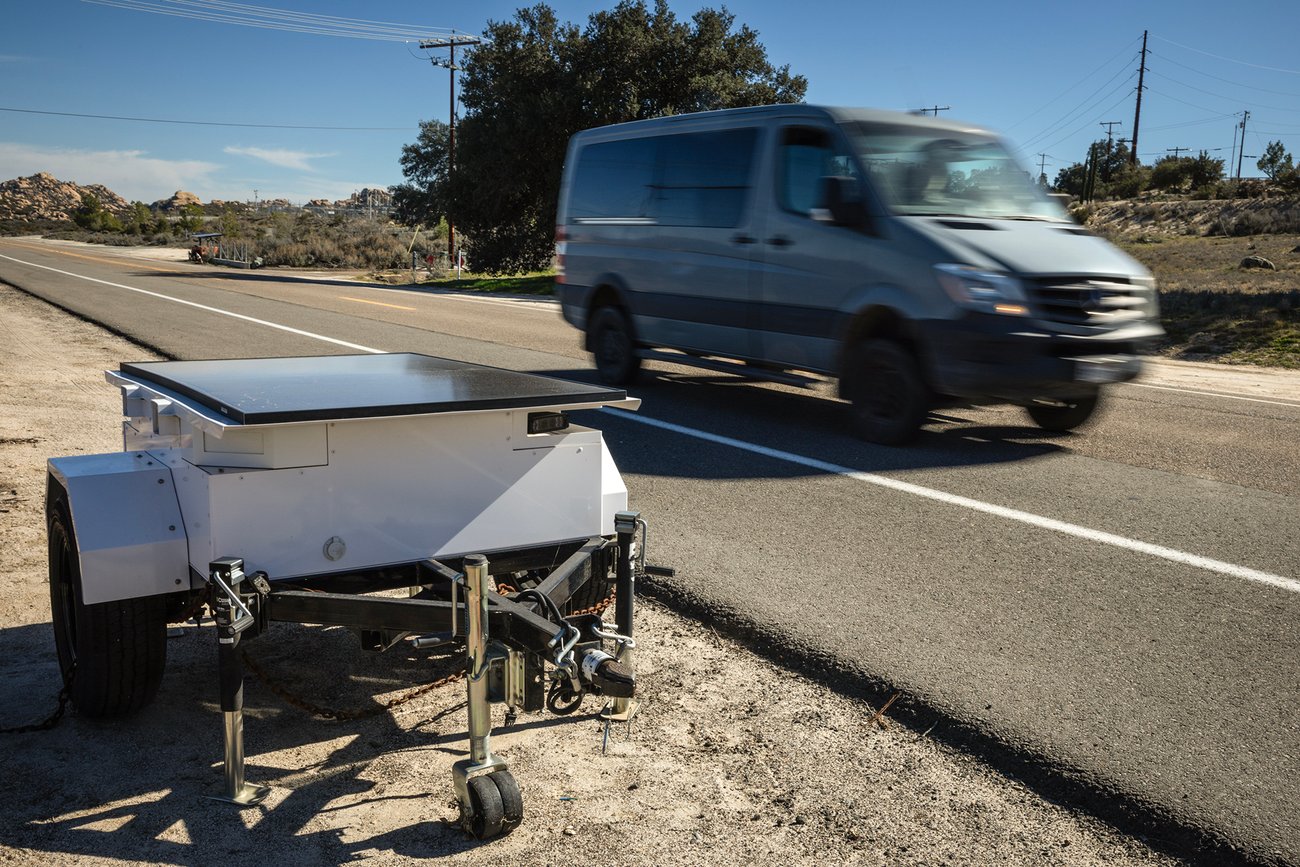
An automated license plate reader sits along Old Highway 80 near Boulevard in the Jacumba Hot Springs area of San Diego on Feb. 7, 2026. Photo by Zoë Meyers for CalMatters |
|
|
|
|
Sen. Sabrina Cervantes’s bid to prevent automated license plate readers (ALDRs) passed the Assembly Transportation Committee on Monday along party lines.
Cervantes told the committee that the impact of ALDRs on halting crimes has not been known, but that its impact on regular citizens is well documented.
“We have seen abuses in Marin, Riverside, Los Angeles, Orange, San Diego, and Sacramento counties where ALPR systems have been used to track immigrants, facilitate unlawful data, sharing, and even stalk or harass private citizens. When ALPR data is misused, officers can track former partners, target journalists, monitor political activity, or facilitate unlawful surveillance of immigrant communities.,” Cervantes told the committee.
Senate Bill 1013 would prevent ALPR information from being accessed by employees at transportation agencies or public works departments. It would also allow law enforcement to only use ALPR information to locate vehicles and people when the person are reasonably suspected of committing a crime, or in search of a person who has been reported as missing. It would also stop public agencies from holding onto APLR information for more than 30 days after it is collected, unless it is used in the evidence file of an active investigation.
Assemblymember Corey Jackson (D-Moreno Valley) voted in favor, while Assemblymember Tom Lackey (R-Palmdale), who represents rural San Bernardino County, voted against it.
Lackey said the bill would protect violent offenders due to the 30-day window.
“I'm not here to excuse misuse of this tool, but this is an extreme response to any level of misuse. And I would tell you that it supports the wrong part of our society,” Lackey said.
In response, Cervantes said that the bill won’t stop law enforcement’s investigatory powers.
“If a municipality elects to permit retention of license plate data to enable historical searches, they can obtain a warrant to keep them for a longer period of time,” Cervantes said.
An earlier version of the bill, Senate Bill 274, was vetoed by Gov. Gavin Newsom in October. Newsom’s veto message says that the bill should allow the use of APLRs to locate missing persons, a change Cervantes adopted into SB 1013.
CalMatters’ Khari Johnson and Mohamed Al Elew have reported on the use of ALPRs in the state.
“Law enforcement agencies across Southern California violated state law more than 100 times last month by sharing information from automated license plate readers with federal agents, records show,” they reported June 13, 2025.
“Southern California residents are noticing new license plate readers that appear to be operated by the Border Patrol. Some have had confusing encounters with agents,” Johnson and Wendy Fry wrote in February. |
|
|
|
|
Advertisement |
 |
|
|
|
|
|
|
|
The sun sets behind Joshua trees and mountains at Joshua Tree National Park, a vast protected area in Southern California known for its rugged rock formations and stark desert landscapes, on Aug. 26, 2025. Photo by Tayfun Coskun, Anadolu via Getty Images |
|
|
|
|
“People across the globe come to visit the arid and bleak Mojave Desert to gaze upon the marvelous towers known as Joshua trees, writes Jacob Mull in CalMatters’ commentary forum.
“I immediately became captivated by these rugged icons — tenacious survivors that have weathered millennia in blistering heat — only to realize that even the most valiant symbols of tenacity have a breaking point.”
Mull, a masters degree student in conservation leadership at Colorado State University, writes about the possibility of the ice age-era trees going extinct from development and climate change by the end of 2100.
Read the full commentary here: Thousands of Joshua trees are dying as the Mojave region develops. They must be saved.
Want to submit your own guest commentary? View our submission guidelines. |
|
|
|
|
|
|
|
|
|
Aidan McGloin
Inland Empire Reporter |
|
|
|
|
|