|
|
|
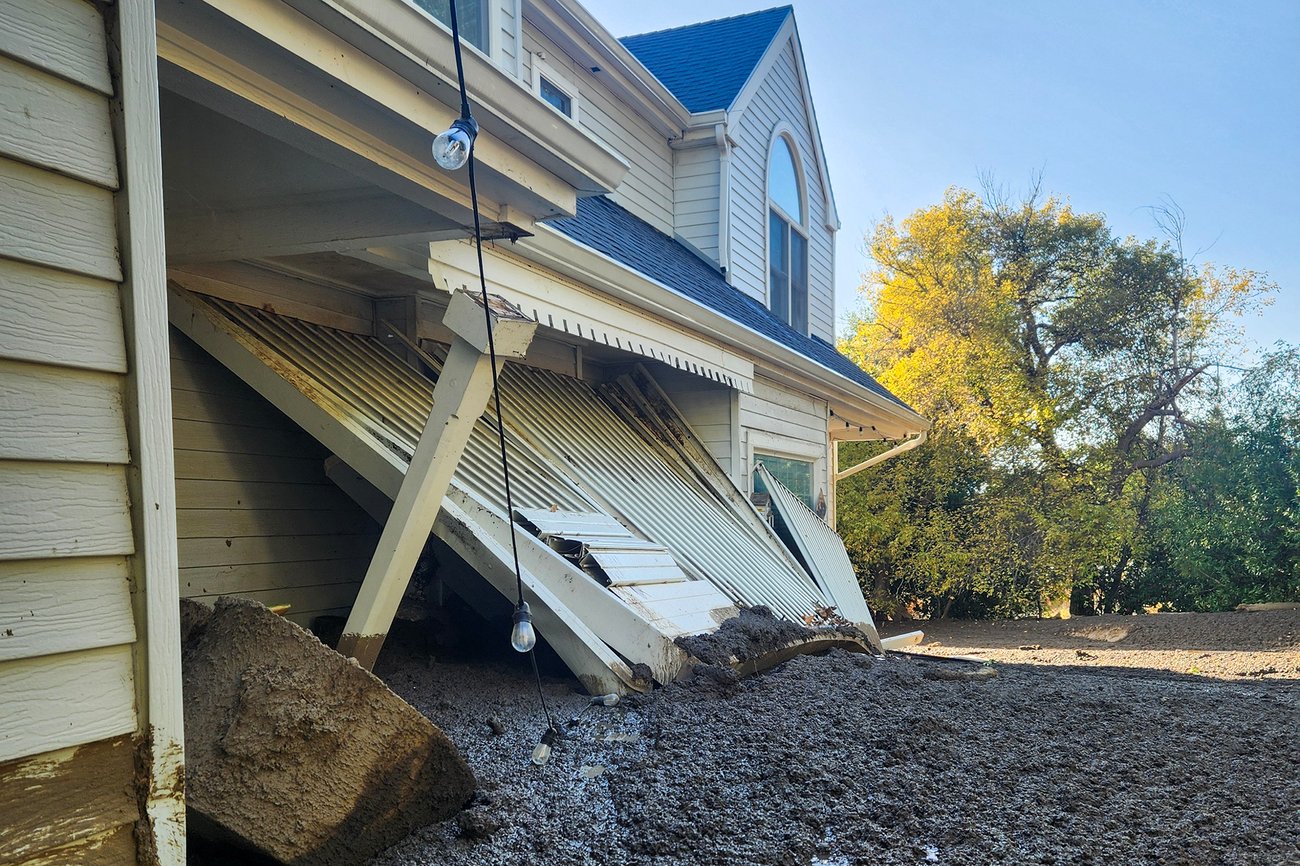
The Bennett's back patio, fuel system and AC unit were destroyed by a 10-foot wall of mud from the Sept. 18 mudslides in Oak Glen. Photo courtesy of Susan Novacoski-Bennett |
|
|
|
|
Susan Novacoski-Bennett can’t get the state’s insurance plan to cover any of the $500,000 in damage to her Oak Glen property from the Sept. 18 mud slides.
Novacoski-Bennett and her husband Gary live on Potato Canyon Road, directly downstream and adjacent to the Oak Glen Steak House in the small community east of Yucaipa. When a ten-foot wall of mud pushed against their house, they lost their AC unit, their fuel source, 60 apple trees, their rental campsite and their wrap-around porch. Their back door opens onto a ten-foot drop, with a plywood serving as a barrier. They lost $10k in annual revenue between the campsite and the trees, and spent $144,000 of their savings just to remove the mud from the property. They have a makeshift fuel system set up by a church member, but used the fireplace and space heaters to warm themselves before it was installed.
They had two types of home insurance, through the private company Wright Insurance, at $400 a month, and the California Fair Access to Insurance Requirements Plan, a program created by California in 1968, at $589 a month. Wright Insurance paid out $20,000 for flood damage. The FAIR Plan is refusing to pay. Their claim is that the mud flows were not caused by the El Dorado Fire’s burn scars, which Novacoski-Bennett says caused loose mud and dead trees to snowball into a mudslide. Their insurance adjustor, a third party called Pilot Catastrophe Services, claims the burn scars have been revegetated already. Without the damage being caused by the wildfire, their home is not covered under the policy. Even after the insurance commissioner sided with the Bennetts, the program denied the claim.
“You see that piece of log over there? It’s got burn scars,” Novacoski-Bennett said, pointing to a tree still stuck by the creek.
“I have nothing bad to say about CalFire, about the community in general, and especially the Christian community,” Novacoski-Bennett said. “Who didn’t show up for us was (the FAIR Plan).”
CalMatters published multiple accounts of Californians’ difficulties with insurance payouts this week.
“I am an aerospace engineer by trade, but for the last year my second full-time job has been fighting my insurance company,” wrote Altadena resident Richard Reiber.
Some Altadena residents are calling for Insurance Commissioner Ricardo Lara to resign, Levi Sumagaysay wrote. |
|
|
|
|
Our nonprofit, nonpartisan newsroom depends on support from people like you. |
|
|
|
|
Did someone forward you this email? Sign up for The Inland Empire. |
|
|
|
Budget proposal unveiled and reviewed |
|
|
|
|
|
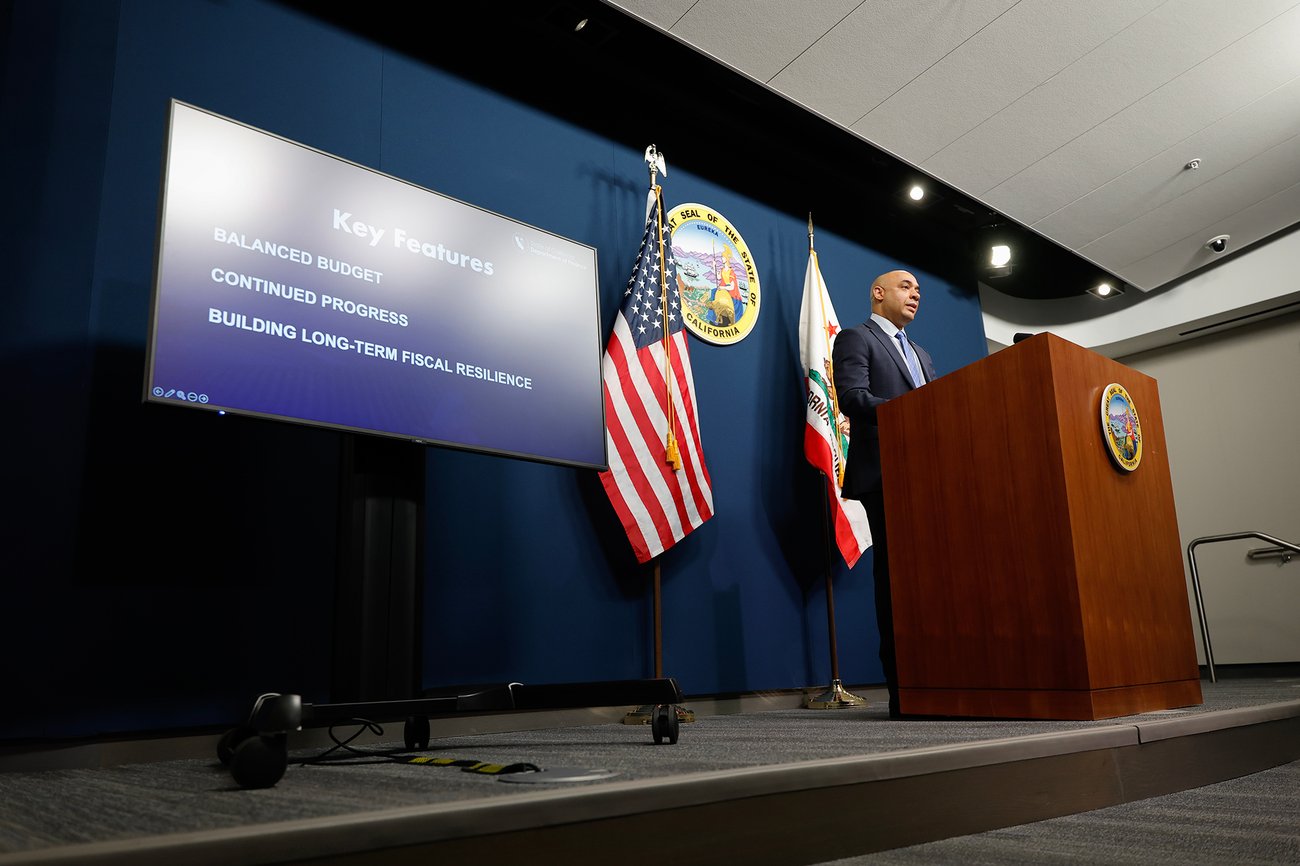
California's Director of Finance, Joe Stephenshaw, leads the budget proposal presentation for the 2026-27 fiscal year, at the Capitol Annex Swing Space in Sacramento, on Jan. 9, 2026. Photo by Fred Greaves for CalMatters |
|
|
|
|
Gov. Gavin Newsom presented his final budget proposal on Jan. 9. The proposal anticipates $9 billion more in revenue than previously expected, but still puts the state $2.9 billion in the red. A team of nine CalMatters’ journalists broke the plan down: $3 billion more into the rainy day fund, $715 million more for higher education systems, but cut funding for immigrants’ Medi-Cal and homeless housing. Read the whole digest here.
Maya C. Miller wrote on the budget’s impact on new Senate President Pro Tem Monique Limón: Limón, 46, a progressive backed by labor unions and the first Latina to lead the Senate, will face arguably her greatest legislative challenge yet as she and her diverse caucus grapple with a daunting projected $18 billion state budget deficit and historic federal funding cuts from the Trump administration.
Newsom’s final budget faces a litany of political and financial challenges, Dan Walters writes.
State Sen. Rosillicie Ochoa Bogh (R-Yucaipa) criticized the proposal, asking for $3 billion in wildfire prevention and $1 billion in water storage, and $400 million in allocation of Proposition 36 funding.
“Our communities are dealing with rising crime, water shortages, and underfunded schools. This budget should focus on fixing those problems, not growing state government,” she said in a press release.
Assemblymember James Ramos (D-San Bernardino) was pleased.
“We live in volatile, even hazardous times – like walking a high wire on a windy day – and Governor Gavin Newsom’s proposed 2026-27 budget is his vision of how to balance fiscal uncertainty while attempting to ensure that needy children and families receive the services they need. Further revenue cuts from Washington would not be a surprise. Washington has already cut $1.4 billion in vital programs such as Temporary Assistance for Needy Families (TANF) that help support low-income fellow Californians for basic living costs, child care, disaster aid and education,” his statement reads.
State Sen. Eloise Gomez Reyes praised the environmental health allocations.
“I am especially focused on how this budget addresses environmental health—particularly in overburdened regions like the Inland Empire, where too many families live with the daily impacts of poor air quality, unsafe drinking water, and environmental degradation. So, I’m pleased that the Governor’s proposal identifies investments from the recently approved water bond (Prop 4), a new funding plan for the now extended Cap and Invest Program, and funding to ensure California remains a leader in the development and deployment of electric vehicles,” she wrote.
Assm. Corey Jackson (D-Moreno Valley) thought the budget did not go for enough.
“At a time when families are struggling, we must be more aggressive in addressing food insecurity, getting unhoused residents into stable housing, and significantly increasing the supply of affordable housing,” he wrote.
|
|
|
|
|
Advertisement |
 |
|
|
|
|
Blythe hospital to be kept afloat by county
|
|
|
|
|
|
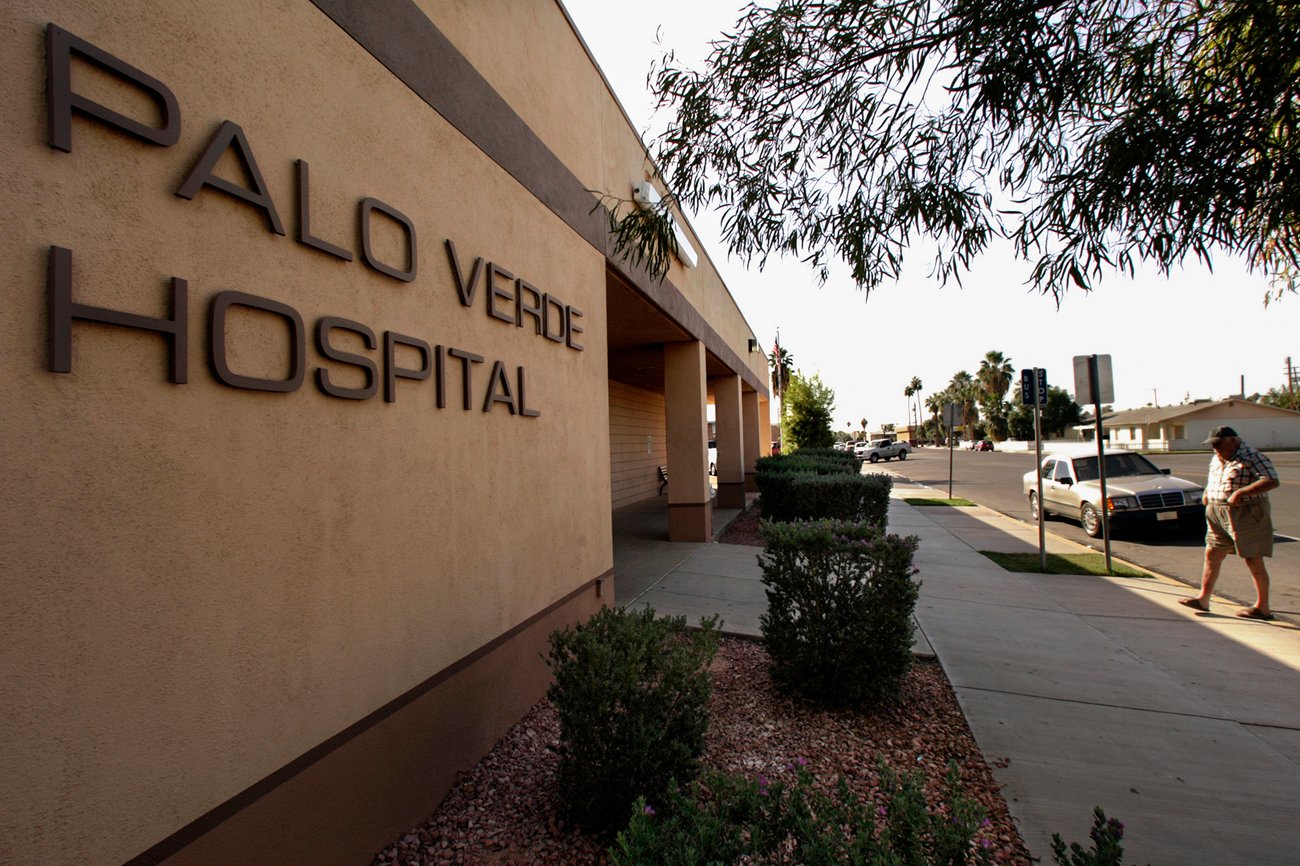
The exterior of Palo Verde Hospital in Blyth on Oct. 27, 2005. Photo by Irfan Khan/Los Angeles Times via Getty Images |
|
|
|
|
The Riverside Record reported that the Palo Verde Hospital and Community Clinic in Blythe is staying open another week after receiving a $330,000 loan from the city.
The agreement was made with the condition that the county operates the hospital. Another special meeting will be held today, Jan. 14, at Blythe City Hall.
Read the full story: Palo Verde Healthcare District, Blythe Come To Agreement On Bridge Loan.
The Riverside Record, a nonprofit newsroom, has been reporting consistently on the hospital’s financial troubles since May. The district filed for bankruptcy in October, and Riverside County approved the allocation of property taxes to support the hospital the same month.
|
|
|
|
|
|
|
|
|
|
Aidan McGloin
Inland Empire Reporter |
|
|
|
|
|