|
“This crisis is an urgent call to action.”
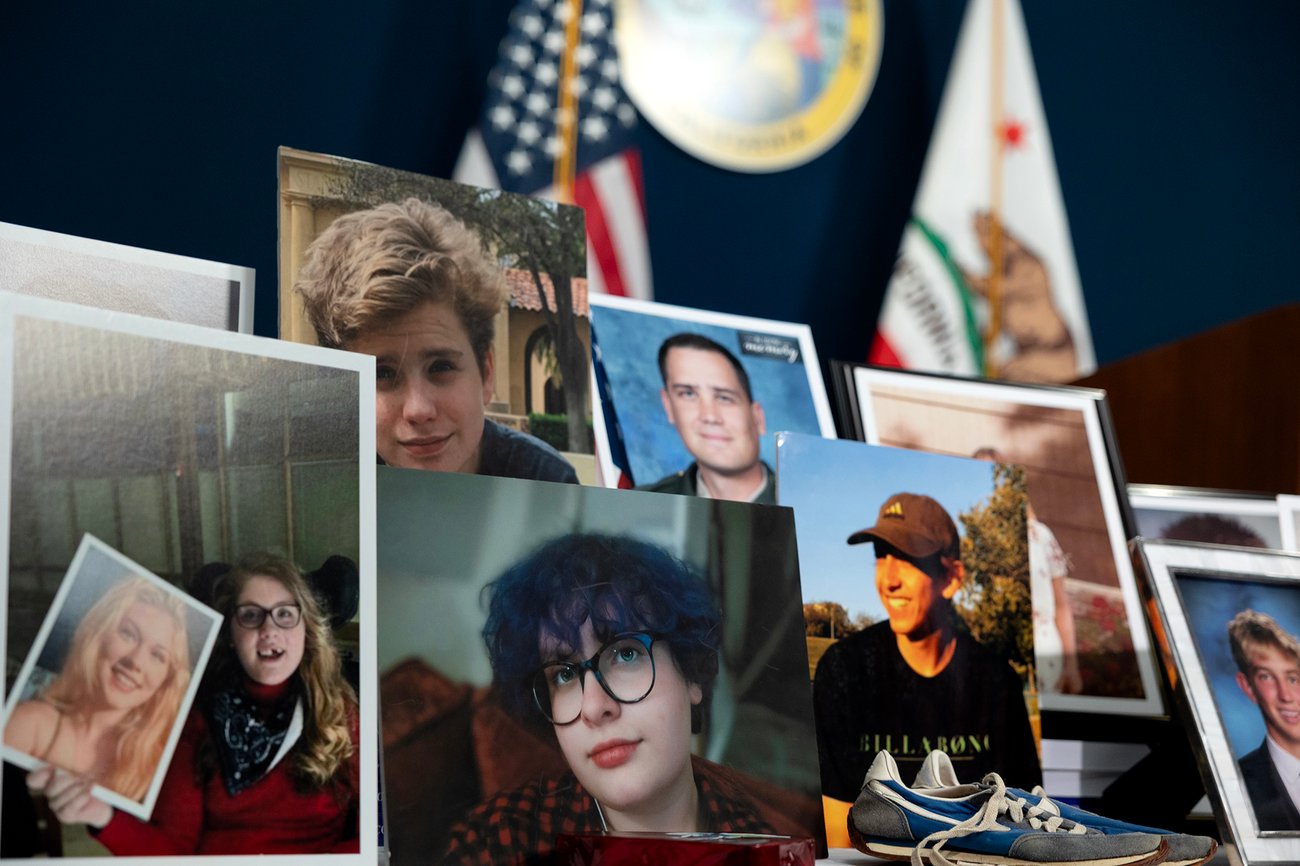
That’s Assemblymember Cottie Petrie-Norris, a Democrat from Irvine. On Thursday, she joined families, Democrat and GOP lawmakers, advocates, a police chief and a trauma surgeon at a Capitol press conference to present an unprecedented legislative package to confront California’s deadly drivers.
She called the package of bills “California’s largest and most significant anti-drunk driving and anti-DUI push in over two decades.”
“It’s time,” said her colleague on the other side of the aisle, Assemblymember Tom Lackey of Palmdale.
“We are failing, folks, and I’m so heartened by this big coalition of people. I’ve waited 12 years for this,” he said, referring to his time in the legislature after decades as a CHP officer.
At Thursday’s event, lawmaker after lawmaker stepped to the stage to discuss their proposals. They were often followed by grieving parents, there to talk about unfathomable loss.
Read the account of the day here from reporters Robert Lewis and Lauren Hepler. Over the last year, their work has exposed how the state allows deadly drivers to stay on the road.
Many of the proposals would directly address the issues they’ve uncovered. We will be reporting on them closely as they progress this year.
This deep investigative series and our independent journalism is powered by CalMatters members. Join them with a gift today to continue bringing all Californians essential information and holding people in power accountable.
The bills highlighted at Thursday’s press conference would:
Make vehicular manslaughter a violent felony and increase DUI penalties
-
(Introduced by Senator Bob Archuleta, a Democrat from Norwalk.)
-
Issue: Vehicular manslaughter isn’t considered a “violent” felony under state law, our reporting shows, allowing people convicted of the crime to serve only a fraction of their time behind bars.
-
Proposed changes: This bill would add vehicular manslaughter with “gross negligence” to the list of violent felonies. It would also add prison time for crashes with multiple victims and drivers with a prior felony DUI within 10 years. Finally, the bill would stiffen penalties for hit-and-run collisions where the driver had a prior DUI and expand so-called “Watson advisements” that make it easier to charge repeat DUI offenders with murder if they kill someone.
Close the DMV point loophole for drivers who get diversion after a deadly crash
-
(Introduced by Assemblymember Lori Wilson, a Democrat from Suisun City.)
-
Issue: Recent criminal justice reform laws made it easier for judges to wipe misdemeanor convictions — including vehicular manslaughter — from criminal records. In practice, that means some California drivers can get points added to their license for speeding, but not for killing someone, our reporting shows.
-
Proposed change: Ensure the DMV adds points to a drivers license in vehicular manslaughter cases where a driver gets off with misdemeanor diversion instead of a criminal conviction.
Ensure deadly drivers don’t get their licenses back as soon as they get out of prison
-
(Wilson plans to introduce.)
-
Issue: License suspensions or revocations often start at the time of a conviction and can actually end before someone is released from prison.
-
Proposed change: Require license suspensions and revocations to start when a driver is released from incarceration as opposed to at the time of a conviction, potentially keeping licenses away from dangerous drivers for years longer than the current law.
Increase DMV points for fatal crashes
-
(Introduced by Assemblymembers Tom Lackey, a Republican from Palmdale, and Cottie Petrie-Norris, a Democrat from Irvine.)
-
Issue: California drivers currently get the same number of points added to their license for killing someone as they do for non-injury DUIs and hit-and-run collisions.
-
Proposed change: Increase the number of points a vehicular manslaughter conviction adds to a driver’s license from the current two points to three.
Allow prosecutors to charge DUIs as a felony on second offense
-
(Introduced by Lackey)
-
Issue: It currently takes four DUIs within 10 years to be charged with a felony in California. Many other states allow prosecutors to charge a felony after two or three offenses.
-
Proposed change: This would allow prosecutors to charge a second DUI offense within 10 years as a felony.
Allow prosecutors to charge DUIs as a felony after third offense, increase repeat DUI penalties
-
(Introduced by Assemblymember Nick Schultz, a Democrat from Burbank)
-
Issue: Habitual repeat DUI offenders often face few added penalties.
-
Proposed change: Similar to Lackey’s bill, Schultz’s would allow prosecutors to charge a driver with a felony for their third DUI in 10 years. It would also increase the time some repeat DUI offenders are required to have an ignition interlock device installed on their cars and extend the time their driving privileges are revoked.
Revoke the licenses of repeat DUI offenders for longer
-
(Introduced by Lackey)
-
Issue: California takes away repeat DUI offenders’ driving privileges for three years. Some other states revoke licenses for up to 15 years, or even issue lifetime bans.
-
Proposed change: Increase the revocation term to eight years for someone who gets a third DUI.
Bar people convicted of serious or repeat DUIs from purchasing alcohol
-
(Introduced by Assemblymember Rhodesia Ransom, a Democrat from Stockton.)
-
Issue: California’s current system allows many repeat DUI offenders to stay on the road with few safeguards.
-
Proposed change: Allow judges to essentially bar people convicted of serious or repeat DUIs from purchasing alcohol by adding a “NO ALCOHOL SALE” sticker to their driver’s licenses, similar to a law recently enacted in Utah. A “Severe DUI” would be defined as an offense with a blood-alcohol level at least twice the legal limit; conviction for two DUIs within three years; or a DUI causing great bodily injury, death, or major property damage.
Mandate in-car breathalyzers for all DUI offenders
-
(Introduced by Petrie-Norris)
-
Issue: Most states already require all DUI offenders to install in-car breathalyzers. California does not. State law currently requires the devices, which a driver must blow into for their car to start, for people convicted of two or more DUIs, or a DUI that results in injury.
-
Proposed change: Require the breathalyzers for all DUI offenders. (A nearly identical measure was gutted late in the legislative process last year after the DMV said it did not have the technology or funding to implement the changes.)
Expand law enforcement DUI training
-
(Introduced by Assemblymember Juan Alanis, a Republican from Modesto.)
-
Issue: Local law enforcement training varies widely in California, meaning that officers aren’t always trained in how to test for drunk and drugged driving.
-
Proposed change: Increase DUI training for police officers who work traffic enforcement to ensure they are proficient in areas like sobriety testing and report writing.
|