|
|
|
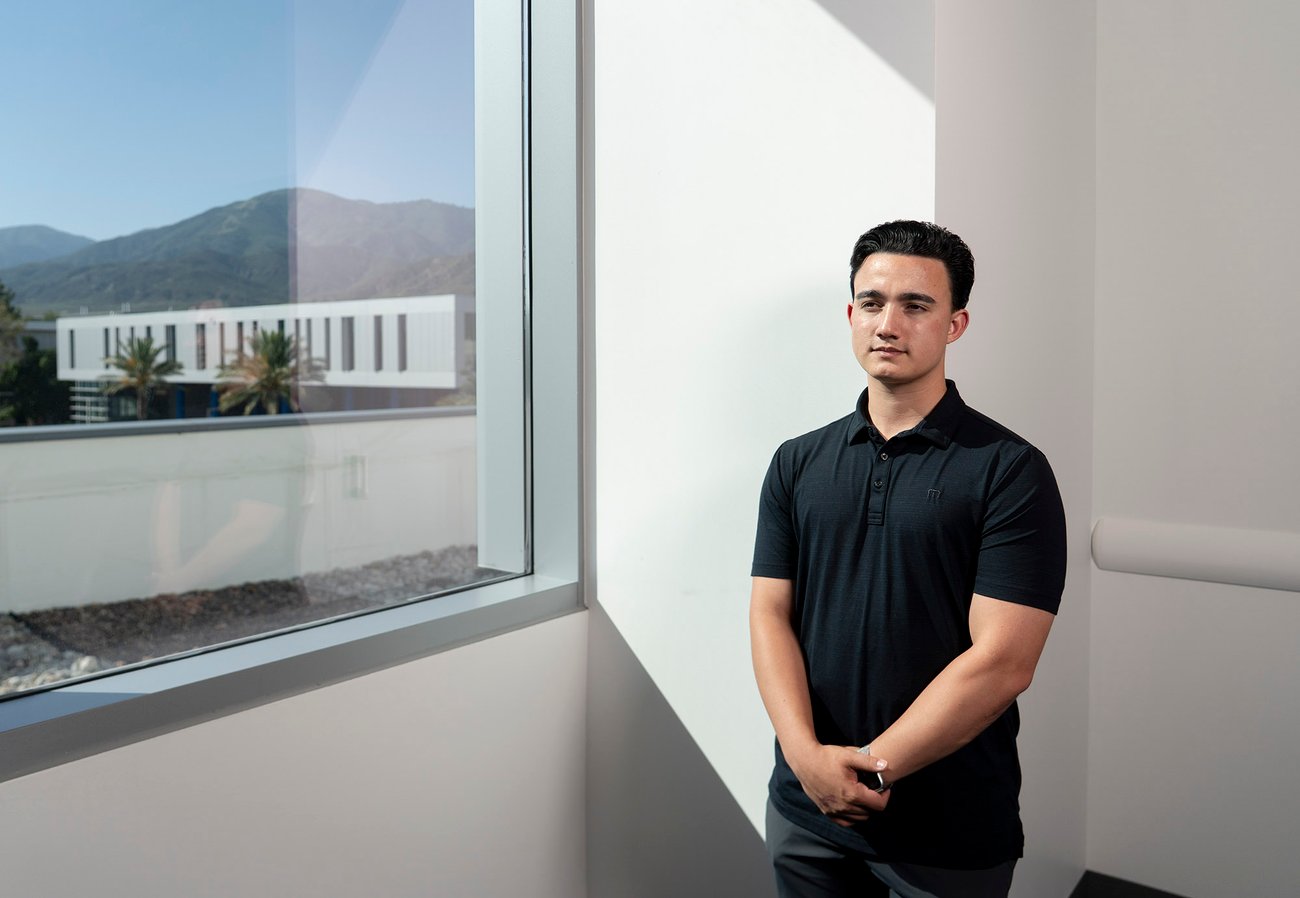
Carson Fajardo at Cal State San Bernardino on May 19, 2025. Photo by Kyle Grillot for CalMatters |
|
|
|
|
Students who graduated from high school during the pandemic faced double difficulty; after missing most of their senior year, many started college with learning loss and social anxiety.
CalMatters spoke with Inland Empire college students about starting a new chapter of life while the world was in lockdown. They described feeling lonely and frustrated that college life and learning opportunities weren't what they expected. And they shared the ways they adapted to those challenges to find their paths.
Many spent their senior year of high school on Zoom, without the usual milestones of homecoming, prom or graduations. They struggled to pass classes and navigate college applications. Then they entered college with gaps in their study skills and social skills.
The transition to college is tough under normal circumstances, but students who did it during the pandemic spent much of their freshman year in online classes or alone in dorm rooms. Five years later, some are graduating from college, while others switched gears to join the workforce.
The challenges were magnified in the Inland Empire, where only about a quarter of all adults hold four-year degrees, compared to 37% statewide.
“When I think about the pandemic, I really think about how first generation and low socioeconomically disadvantaged students encountered disproportionate challenges,” said Christine Mata, dean of students for UC Riverside.
Some students lost ground during their senior year of high school, as glitchy online learning systems left them with “holes” in their education, said Lesley Davidson-Boyd, associate vice president of California State University, San Bernardino.
|
|
Did someone forward you this email? Sign up here. |
|
Navigating online applications was tricky without in-person help from counselors or teachers; one student had panic attacks during that process.
“We definitely saw more incidents of generalized anxiety and panic,” Davidson-Boyd said.
On campus, students said they found a “ghost town,” where many of their classmates had lost the confidence to make new friends or even carry on conversations.
“They hosted a lot of events to get people to socialize more and get people to meet other students,” said Maribel Gamez-Reyes, an English major at UC Riverside. “But a lot of times I would rather be alone and on my computer.”
Carson Fajardo, outgoing president of Associated Students Incorporated at Cal State San Bernardino, said he tried to draw students out of their dorm rooms with activities and parties. He found that most wouldn’t leave their comfort zones.
“I was constantly trying to plan events,” Fajardo said, “and then seeing people weren’t coming to them, and then going back to the drawing board, and figuring out how to get people engaged was a struggle for sure.”
Instruction wasn’t what they expected either. Failure rates climbed at Cal State San Bernardino because some students didn’t participate or even show up to class, Davidson-Boyd said. Students thought professors didn’t make an effort to engage them or help fill pandemic-era learning gaps in math and writing.
“Transitioning into college was honestly really hard, especially after coming from a year of remote learning,” said Adriana Banda, a student at Cal State San Bernardino’s Palm Desert Campus.
You can learn more about their challenges and successes during the pandemic in this CalMatters story.
|
|
|
|
San Bernardino marijuana suit pits drug laws against religious liberty |
|
|
|
|
|
Cannabis plants at a growing site in Sacramento on Jan. 26, 2022. Miguel Gutierrez Jr., CalMatters |
|
|
|
|
San Bernardino County Sheriff Shannon D. Dicus is fighting a lawsuit challenging the seizure of 60,000 marijuana plants and the arrests of 36 people in raids on a property leased by the California Evergreen Farms Native American Church last fall, the San Bernardino Sun reported.
Dicus said the raids were justified by problems with illegal water discharge and the use of cancer-causing pesticides. The suspects face misdemeanor and felony charges for marijuana cultivation, sale, possession, transportation, unlawful water discharge, illegal pesticide use and tax code violations. Sheriff’s authorities also confiscated six weapons.
James Warren “Flaming Eagle” Mooney, founder of the church branch, filed a lawsuit that accuses Dicus and San Bernardino County of violating the church’s First Amendment right to religious freedom. He wants the court to recognize California Evergreen Farms’ right to grow and use sacramental plant medicines, including cannabis, for religious purposes.
|
|
|
|
|
Advertisement |
 |
|
|
|
Could a Hemet annexation effort boost the city's profile? |
|
|
|
|
|
Aerial view of Hemet city during a cloudy day in the San Jacinto Valley in Riverside County. Photo by Thomas De Wever, Getty |
|
|
|
|
Proponents of an annexation plan to make Hemet the fourth-largest city in Riverside County say it would bring much needed services and business to the community. Critics say it would add unwanted rules and urban pollution, the Press-Enterprise reports.
The plan would fold East Hemet, Valle Vista, Diamond Valley and Sprague Heights and the Ramona Bowl Amphitheatre into the city, adding 34,000 acres of unincorporated county land. That could boost the city’s population by a third to more than 120,000, placing it just behind Riverside, Moreno Valley and Corona. Advocates say it could help the city attract jobs and shopping opportunities.
Some residents say they’re skeptical of the business opportunities and warn that expanding the city could disrupt the quiet existence and unregulated lifestyle of unincorporated areas
While you are here, please sign up for the Inland Empire newsletter and let me know what kinds of stories you’d love to read.
And please add my email to your contacts: inlandempire@calmatters.org
|
|
|
|
|
|
|
|
|
|
Deborah Sullivan Brennan
Inland Empire Reporter |
|
|
|
|
|