|
|
|
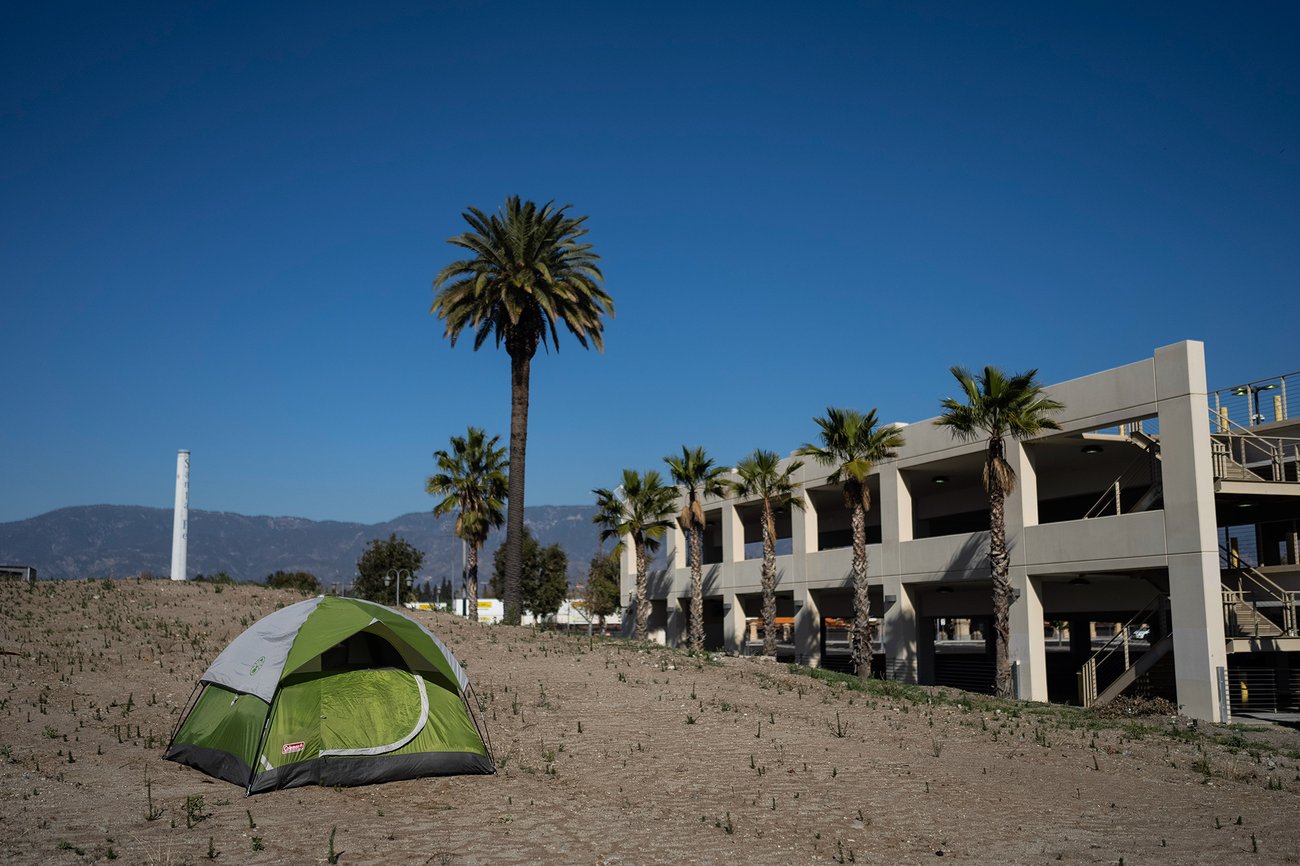
A homeless person's tent sits in an empty lot next to a parking structure in San Bernardino on Dec. 8, 2022. Photo by Jae C. Hong, AP Photo |
|
|
|
|
California’s homeless housing funding keeps making news.
Last week, the Riverside City Council voted 4-3 to send back a $20 million state grant that would have remodeled the Quality Inn at 1590 University Ave. into 114 studio apartments, as the Raincross Gazette, Press-Enterprise and IE Community News reported. Ninety-four apartments would have been allocated for people with behavioral health challenges, with the remaining apartments set to be affordable housing.
Funding for the program came through Proposition 1, the $6.4 billion mental health bond Californians approved in 2024.
Councilmember Sean Mill, who voted to return the state grant, said he did not believe in California’s Housing First Policy. The policy prioritizes a homeless person’s stable housing ahead of drug recovery. The policy took off in California when Gov. Gavin Newsom allocated the state’s COVID relief funds to remodel motels across the state. CalMatters reviewed the program in 2024.
“I have always been suspect of the housing first model. I believe giving someone a house without treating the root cause of their problems, their root cause, many times, is mental health issues or drug abuse. Giving someone a house, that has mental health issues, and drug abuse issues, and not treating those issues, is not really helping them. It’s really not helping them. Housing First has devolved into housing without enforceable services, rules or expectations,” Mill said.
I don't know how people can get well when they’re on the streets. You need to be able to sleep, and not be living in fight or flight. I will say, as someone who has gone into recovery by choice, choice and choosing to heal and choosing to want to make that decision is always going to be a driver in people, ” said Councilmember Clarissa Cervantes. “Studies have shown when we force people, they relapse.”
The council’s vote is already a campaign issue for Riverside city council candidates, as the Raincross Gazette reported last week. |
|
|
|
|
Our nonprofit, nonpartisan newsroom depends on support from people like you. |
|
|
|
|
Meanwhile, San Bernardino’s remodeled motel project is under negotiations to be sold to the county, as Inland Empire Law Weekly reported last month. The current owner of the property, MP G, received ownership after the company tasked with converting it, Shangri-La Industries, declared bankruptcy after accusing its chief executive officer of embezzling funds, as the Press-Enterprise reported.
Attorney General Rob Bonta has brought a suit against Shangri-La for $114 million. That case is ongoing. San Bernardino County and MP G restarted their negotiations after MP G asked its tenants to either move out, or pay increased rents. Deputy Attorney General Jack Nick wrote to MP G, telling them their requests violated the terms of the agreement. |
|
|
|
|
Did someone forward you this email? Sign up for The Inland Empire. |
|
|
|
UCR researches government purchase policy |
|
|
|
|
|
Ortega Highway near Lake Elsinore. Photo via iStock |
|
|
|
|
A research center at University of California, Riverside, investigated how local governments might purchase and manage tax-defaulted properties. Such programs, known as land banking could be used to reduce blight, generate affordable housing or manage wildfire risk. While the Center for Community Solutions doesn’t advocate for land banking, its new report looks at the nuances and difficulties that municipalities face if they chose to implement these policies.
“The research is definitely not prescriptive. We are not advocating for a certain policy or intervention, or for land banking. This is a policy tool that has been used elsewhere. If we can adapt it to work here, and it’s efficient and effective, that’s great,” Kristen Kopko, Center for Community Solutions research manager, told CalMatters.
Any consideration of the policy should look at fire zones, public transportation and local employment opportunities, the report said. Kopko said other factors should also be considered, and that these were just a starting point.
The report focused on two areas with high concentrations of foreclosed properties: Lake Elsinore in Riverside County and Lake Arrowhead in San Bernardino County, neither of which offer many jobs. Land banking might need to be paired with targeted housing subsidies or regional transit connections to connect residents to jobs, the report said.
Over 90% of foreclosed properties across both areas are within a high fire hazard zone. Land banking in those areas could mitigate fire risk by turning properties into fire-resistant open spaces, the report said.
The report also noted unique factors with each county. Seventy-five percent of foreclosed properties in Riverside County were kept by their owner after. Most of San Bernardino County’s foreclosed properties were in unincorporated areas.
You can read the report here: Exploring Land Banking as a Tool for Affordable Housing in the Inland Empire.
|
|
|
|
|
Advertisement |
 |
|
|
|
More insurance commissioner candidate statements
|
|
|
|
|
|
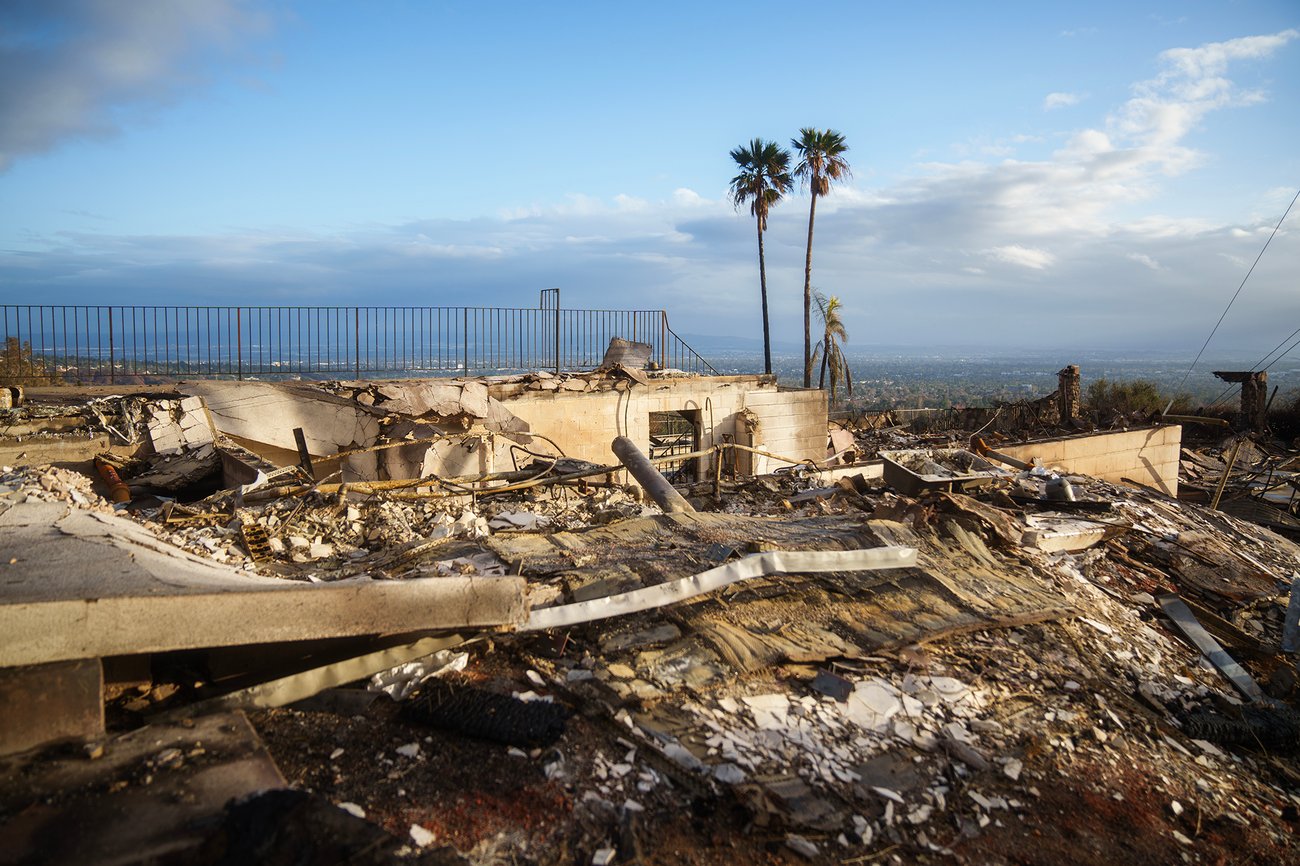
The remains of a house in Altadena that burned in the Eaton Fire. Jan. 26, 2025. Photo by Jules Hotz for CalMatters |
|
|
|
|
Last week, I talked with an Oak Glen homeowner whose house was badly damaged by the mudslides, but can’t get California’s FAIR Plan to pay for the damage. As part of that, I promoted five opinion pieces from insurance commissioner candidates. If you missed them, I’ve linked to them again in the last sentence.
A sixth opinion has been written by Eduardo Vargas, a candidate who teaches high school environmental science in Los Angeles. Vargas’ piece promises he would freeze future rate hikes if elected, investigate the 10 largest property insurance companies in California to root out internal claim procedures and unfair competition practices, and provide a new model of public insurance that is distinct from the FAIR Plan.
You can read it here: Candidate comment: Private insurers are holding California homeowners hostage. The election will be held Nov. 3.
|
|
|
|
|
|
|
|
|
Lawmakers talk before the start of the first Assembly session of 2026 at the Capitol in Sacramento on Jan. 5, 2026. Photo by Fred Greaves for CalMatters |
|
|
|
|
Assm. Corey Jackson (D-Moreno Valley) introduced a bill Jan. 14 that would jumpstart electric car manufacturing and training in Riverside County.
“We must bring the right resources and incentives into our county to strengthen and grow this high-growth sector. We cannot stand idly by while other states and regions in California build these industries,” Jackson said in a press release.
The Senate Environmental Quality Committee forwarded 5-3 a bill that would establish a comprehensive metal shredding regulatory program. There is currently no regulatory agency that oversees metal shredding. Robert Wychowski of Colton’s Ecology Recycling Services spoke in favor, as did Sen. Eloise Gómez Reyes (D-Colton). Gómez Reyes noted the environmental concerns she has heard from constituents about metal shredding, and the importance of recycling as a primary source of steel.
“There is a significant public health concern related to the waste byproducts of metal shredders and what they generate. As was mentioned, this is a circular economy. We have to figure out what we're going to do with this metal, these products, and figure out how we use it,” she said.
The Senate Judiciary Committee, which also includes Gómez Reyes, had a busy hearing Jan. 13.
They passed, 11-2, a bill that would disqualify presidential candidates from the state ballot if they do not meet the requirements for office. Sen. Thomas Umberg (D-Santa Ana), who wrote the bill, said it was to ensure President Donald Trump would not run again for President in the state.
“This wouldn’t be necessary, I don't think, if the catalyst for this bill hadn't been the President of the United States, along with people like Professor Alan Dershowitz, saying that it is possible, notwithstanding the United States Constitution, to serve a third term in office,” Umberg said.
The committee also advanced a bill that would give people a right to sue federal agents if their rights are violated. During the hearing George Reddes, a citizen and veteran, spoke to the harms he suffered when he was detained at Glasshouse Farms in Camarillo last July.
“I'm not here for sympathy. I am here asking for accountability,” Reddes said.
|
|
|
|
|
|
|
|
|
|
Aidan McGloin
Inland Empire Reporter |
|
|
|
|
|