|
Hello CalMatters reader,
As our reporters put the finishing touches on their story last week, they started to hear some encouraging news.
There were rumblings that License to Kill was beginning to spark some action in the Legislature.
-
Sen. Bob Archuleta, a Democrat from Norwalk who sits on the Transportation Committee, met with representatives from Mothers Against Drunk Driving and is considering bills to bring when the Legislature reconvenes early next year. He lost his granddaughter to a drunk driver just before Christmas last year.
“This is not a Republican issue, a Democrat issue, an independent issue — or political issue. This is a life-saving issue,” he told us. “We should all take it as seriously as the family that lost a loved one.”
Schultz said he is weighing several potential measures to address numerous problems our reporters uncovered this year.
And boy did Robert Lewis and Lauren Hepler uncover a lot of problems this year.
So I made a list of the 11 most interesting things I learned this year working alongside them:
1. The number of people dying on California’s roads is skyrocketing.
-
Fatalities on the state’s roadways had been falling until 2010. Then, they started rising incrementally, ballooning by more than 60 percent over the following decade-plus
-
Specifically, alcohol-related roadway deaths here have shot up by more than 50% in the past decade — an increase more than twice as steep as the rest of the country.
2. The California DMV routinely allows drivers with horrifying histories of dangerous driving, including DUIs, crashes and numerous tickets, to continue to operate on our roadways.
-
There are a number of different ways this happens, but they mostly boil down to this: The DMV has wide authority to act against dangerous drivers. It routinely doesn’t use that power.
-
Instead, the DMV relies on the bare minimums outlined by law. That’s allowed dangerous drivers to stay on the road, even after killing someone. Some have even gone on to kill again.
3. The DMV gave a drivers license to a man who had already been convicted of killing young women in two separate crashes and had been caught driving
-
The agency regularly gives drivers their licenses back as soon as it’s allowed to by law, even though it has the authority to suspend them for longer.
-
It even gave a license to a man who previously had six DUIs in California over a six-year period. A year after getting the license, he killed someone on Christmas Eve while driving drunk, prosecutors say.
4. The DMV often waits for someone to be convicted of manslaughter before taking away their license, even though courts move slowly and it has the authority to act quickly.
-
In 2021, a commercial driver drove his semi truck on the wrong side of the road into oncoming traffic, killing a motorcyclist in Kern County. Less than a year later, he still had a valid license when he barreled his semi into slow-moving traffic, hitting four vehicles and killing a woman in Fresno County, records show.
-
In Santa Clara County, a man prosecutors charged with manslaughter got his license just a month and a half after the collision that killed a mother of three young children.
5. Even if you’re convicted of killing someone with your car, the DMV might not take your license.
-
In May 2022, a truck driver made an U-turn in front of a motorcycle, killing 29-year-old Dominic Lopez-Toney, who was finishing his rotations to be a doctor. The truck driver had a long history of trouble behind the wheel. He pleaded no contest to misdemeanor manslaughter and received probation. His DMV record as of February indicated his driving privileges were never suspended; his commercial driver’s license was valid.
-
While felony manslaughter is an automatic three-year loss of driving privileges, a misdemeanor typically carries no such penalty. It’s discretionary — it’s up to the DMV to decide whether to do anything. Often, the agency doesn’t.
6. County courts failed to report hundreds of vehicular manslaughter convictions to the DMV, allowing roadway killers to improperly keep their driver’s licenses.
-
After we discovered the problem, 32 county courts reported more than 275 missing convictions to the DMV. As a result, nearly 200 drivers who’ve killed have had their driving privileges suspended or revoked.
-
Communication between law enforcement and the DMV has been an issue for decades.
7. California has some of the weakest DUI laws in the country.
-
Here, drivers generally can’t be charged with a felony until their fourth DUI within 10 years, unless they injure someone. In some states, a second DUI can be a felony.
-
We give repeat drunk drivers their licenses back faster than other states. Here, you typically lose your license for three years after your third DUI, compared to eight years in New Jersey, 15 years in Nebraska and a permanent revocation in Connecticut.
-
Unlike most states, California doesn’t require first-time drunk drivers to use in-car breathalyzers, known as ignition interlock devices. MADD gave us an “F” on a 2022 national report card of states’ ignition interlock laws.
8. When dangerous drivers get caught operating with a suspended license, law enforcement and courts often issue little punishment.
-
Many drivers stay on the road for years even when the state does take their license — racking up tickets and even additional DUIs — with few consequences until they eventually kill.
-
After getting a DUI, one man went on to be involved in two collisions, receive four traffic tickets and get another DUI, all while his license was supposed to be suspended. He got little more than a fine for refusing to stay off the road. One night in November, he sped down Highway 99 drunk and crashed into the back of a stalled car. It burst into flames, trapping and killing a woman inside.
-
One woman got 16 DUIs. Even her attorney couldn’t believe state law allowed her to be let off on parole. “If you have 16 DUIs, you likely should be doing 20 years in prison,” Marc Kapetan said.
9. You can face more repercussions in California for a speeding ticket than for killing someone with your car.
10. California’s leaders have looked the other way as 40,000 people have died on California roads over the last decade.
-
Year after year, officials with the power to do something about it — the governor, legislators, the courts, the DMV — have failed to act.
-
Gov. Gavin Newsom and his choice to run the DMV, Steve Gordon, have remained silent.
11. The family members of the dead have a striking ability to articulate the absurdity of the current system.
-
“If these people’s children had been killed by a drunk driver, there is no way they would be objecting to this.”
-
“If I walked out my front door today onto my porch and fired a shot into my neighborhood every day until I killed someone, when would I be a menace to society? When do I become a danger to my community? I say it’s after the first shot. Our system says it’s after the last.”
-
“You killed somebody. I’d think there might be some license implications.”
-
“You make a mistake and then you don’t learn from it and then you cause another person to lose their life. It’s unbelievable that he can continue to drive.”
-
“Does this make sense to you? It makes no sense to me. With his record, how does he still have a license?”
-
“I don’t want another family to go through whatever we went through.”
-
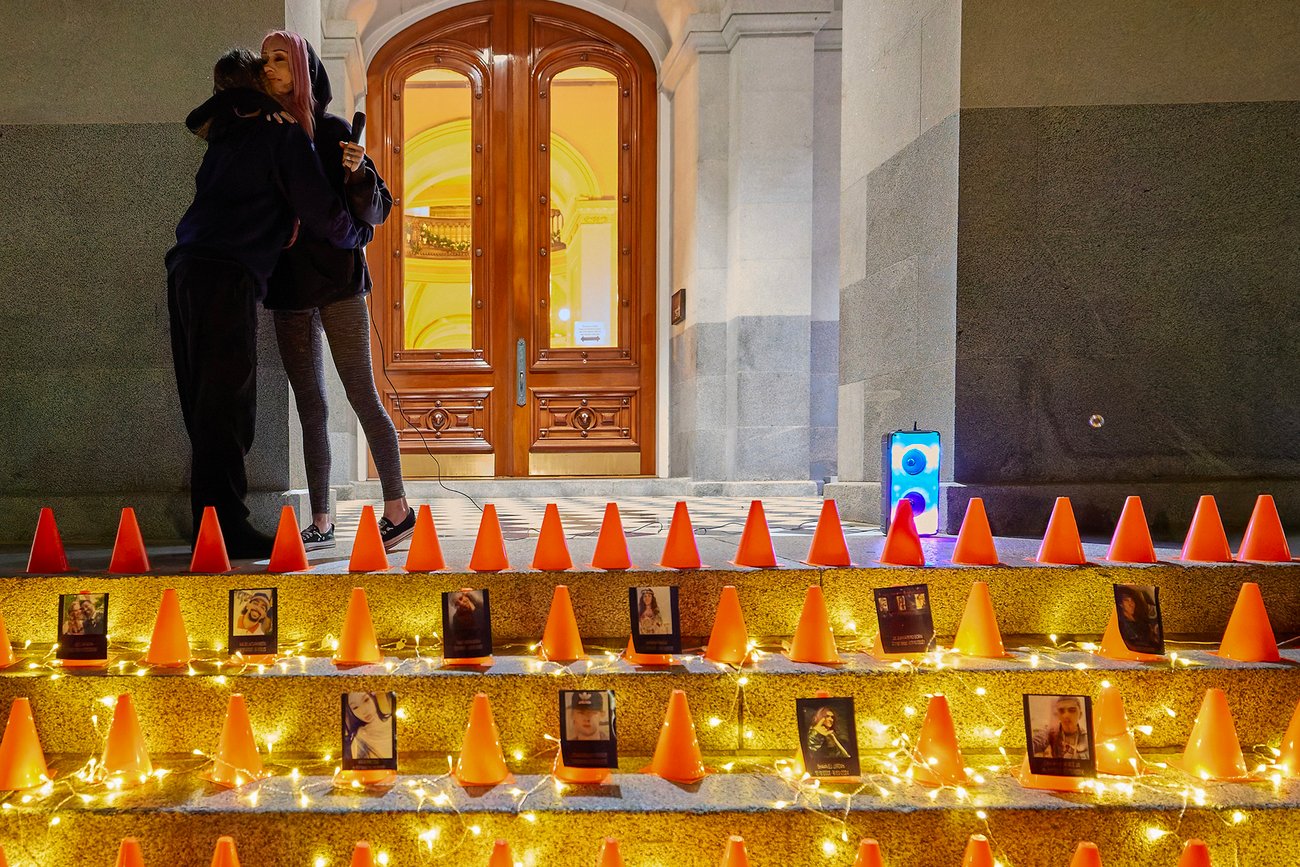
“The worst day of my life is now my life’s work. I will not stop until California changes.”
Thank you all for reading and supporting this work this year. Thank you to Robert, Lauren and the full team of reporters who contributed to this story as well.
And, if you can, please support this vital work with a tax-deductible donation today. Our reader-funded newsroom depends on it and every gift before the new year has triple the impact, thanks to two matching funds.
Please have a safe and happy holiday. We’ll be back with more in 2026. |