Interim housing developments
|
|
|
|
|
|
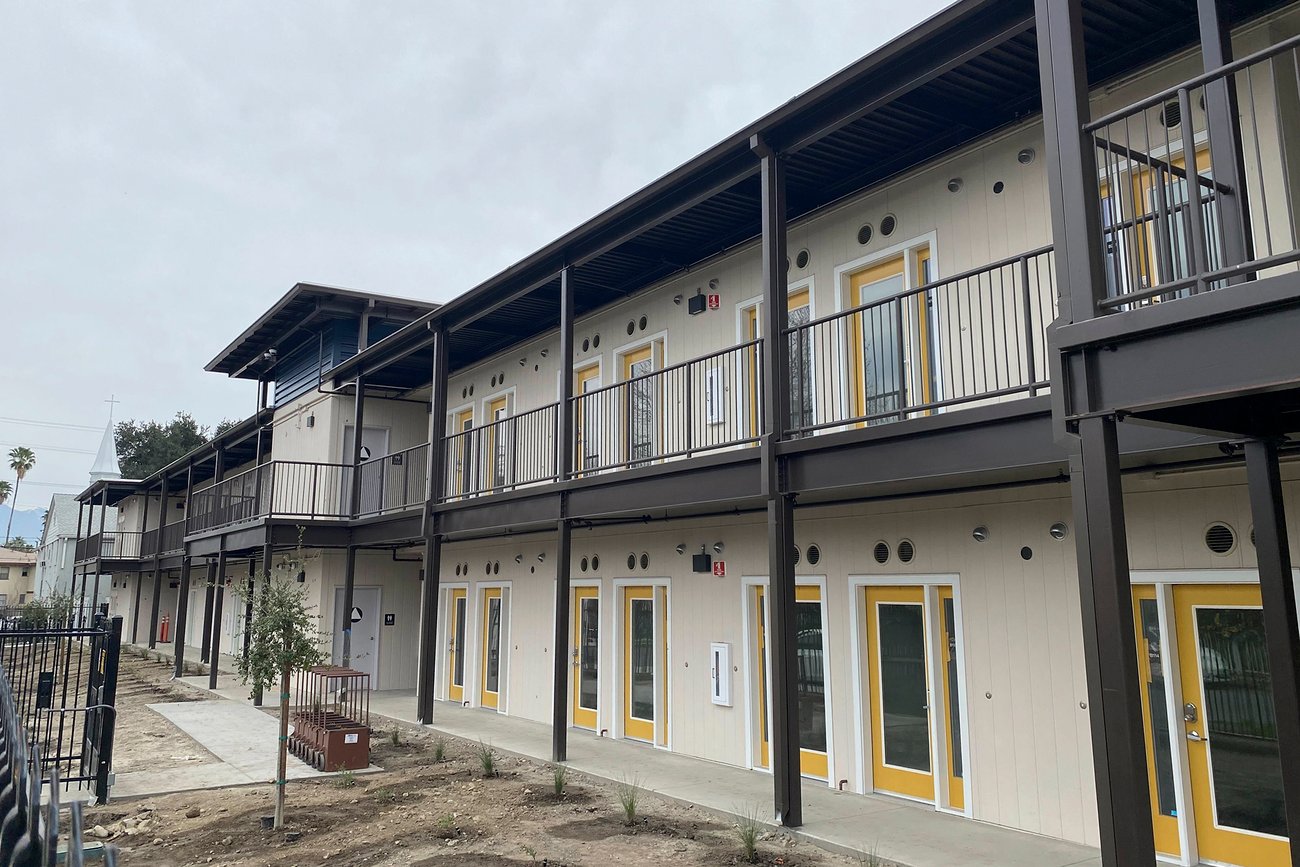
Construction site for the San Bernardino Community Wellness Campus at 1354 N. G Street in San Bernardino on Feb. 10, 2026. Photo by Aidan McGloin, CalMatters |
|
|
|
|
San Bernardino County Supervisors voted yesterday to plug a funding gap for an interim housing project in the city of San Bernardino.
The San Bernardino Wellness Center, a project funded by the state and managed by Lutheran Social Services of Southern California, would provide 140 private studio units near the intersection of Baseline St. and the I-125. The center would replace 75 beds that were previously offered at the location. |
|
|
|
|
Our nonprofit, nonpartisan newsroom depends on support from people like you. |
|
|
|
|
The county estimates total cost would be $243,000 per unit, or $34 million. That’s a $4 million increase from its original expected cost of $30.78 million, a jump the county says is due to new state solar infrastructure requirements and utility connection fees. The city of San Bernardino committed $1.8 million to the project. The county’s investment ensures the project gets over the finish line. The money comes from the county’s housing and homelessness incentive program. The center is expected to be completed by early spring.
The grant comes with strings: the money must be used only for the construction, the shelter must be completed in six months, and it must be occupied after that. If it is, and continues to be, the county will forgive a third of the grant every five years. If not, the county would ask for the money back, with the property on the line. |
|
|
|
|
Did someone forward you this email? Sign up for The Inland Empire. |
|
|
|
|
Across the county line, Riverside city council has continued making news regarding its decision to reject $20 million dollars from the same state project used by San Bernardino to renovate the Quality Inn two blocks west of the I-215’s University Ave. exit.
The Raincross Gazette asked each council member who voted no to fully explain their reasons for their votes against the project.
“This project did not fail because of a lack of compassion. It failed because of a flawed process, rigid constraints, and a deliberate narrowing of participation,” wrote Councilmember Steven Robillard.
“Irrespective of the identified tenant population, the challenges remained that this was incompatible with the University Avenue Specific Plan, was not supported by our first responders—despite the high 911 call volume currently at the Quality Inn, and had no expectation of tenants to be enrolled in services to begin healing,” wrote Councilmember Philip Falcone.
Read the full explanations: Why Four Councilmembers Voted Against University Terrace. |
|
|
|
School admin, attorney, discuss sex abuse case reform
|
|
|
|
|
|
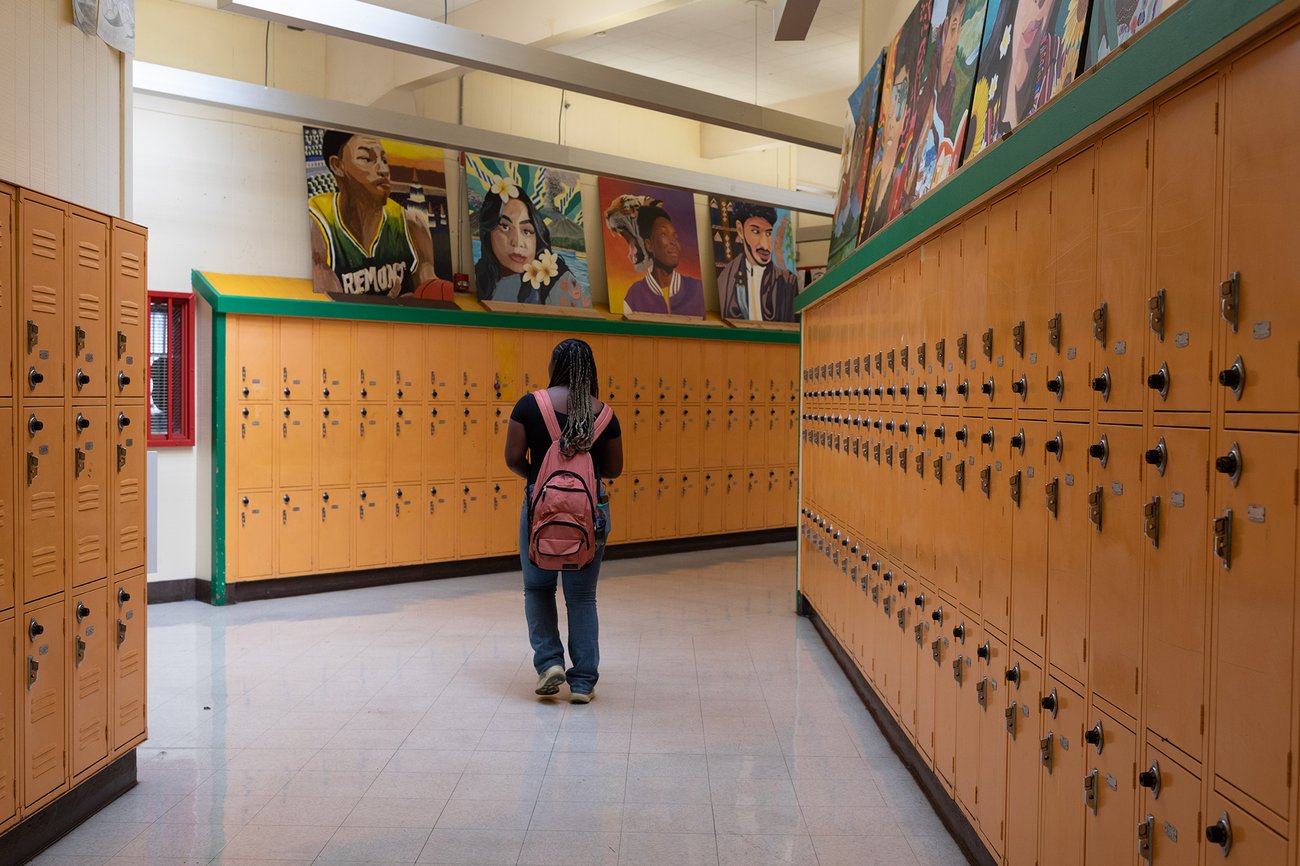
A student walks down a hallway at a high school on October 10, 2023. Photo by Laure Andrillon for Cal Matters |
|
|
|
|
Advertisement |
 |
|
|
|
Legislature votes to fund Planned Parenthood |
|
|
|
|
|
Lawmakers talk before the start of the first Assembly session of 2026 at the Capitol in Sacramento on Jan. 5, 2026. Photo by Fred Greaves for CalMatters |
|
|
|
|
The state legislature voted to bring $90 million in additional funding to family planning providers and plug a hole left by the loss of federal funding. Both houses passed the bill on Feb. 9, and it now sits on the governor’s desk.
The bill passed along party lines, with no Republicans in favor. Assemblymember Tom Lackey (R-Palmdale) did not vote.
“President Trump and Congressional Republicans have specifically and intentionally defunded Planned Parenthood as part of their broader attack on reproductive freedom and abortion rights,” said Assemblymember Jesse Gabriel (D-Encino).
Assemblymember Natasha Johnson (R-Lake Elsinore) voted no.
“As a legislator, I cannot support a bill written in the dark. As a taxpayer, I cannot support spending without accountability. But as a conservative, I cannot support funding abortion providers with public dollars,” Johnson said.
Sen. Kelly Seyarto (R-Temecula) said that he did not know if the money would go towards care for Californians or cover patients from other states.
“Are (out-of-state patients) paying up front for that, or is that a California taxpayer burden? Because what's really difficult for me is to tell a developmentally disabled young person that, ‘you know what? We're not spending the money you need because we're spending the money on somebody from Atlanta.’ That doesn’t make sense, folks,” Seyarto said.
No other Inland Empire representative spoke. |
|
|
|
|
|
|
|
|
|
Aidan McGloin
Inland Empire Reporter |
|
|
|
|
|