|
|
|
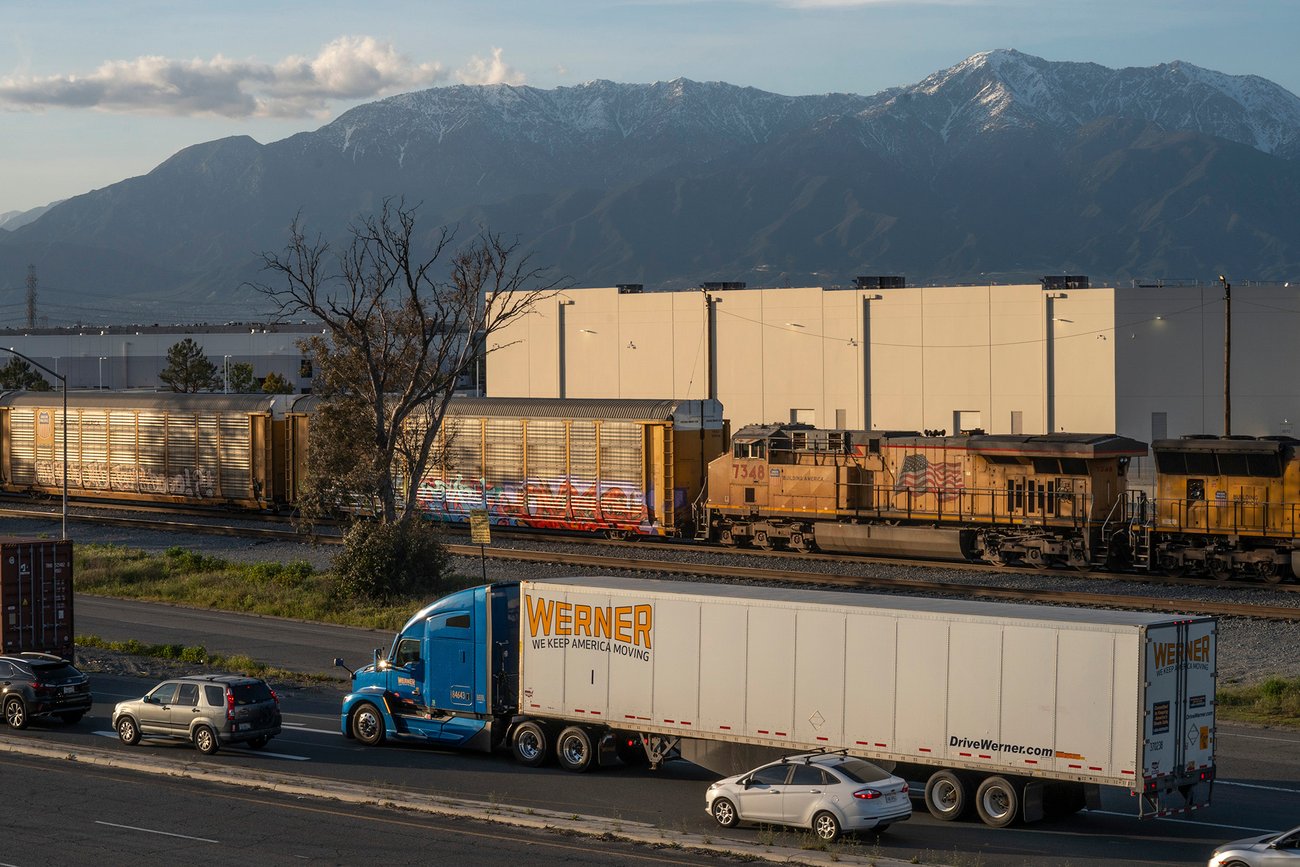
Werner truck drives past an Amazon sort center in Mira Loma, April 4, 2023. Photo by Aryana Noroozi for Black Voice News / CatchLight Local |
|
|
|
|
Trade and transportation jobs dropped in the Inland Empire between March and April, while employment in hospitality and construction sectors declined over the past year, according to a jobs report the California Employment Development Department released Friday.
However government jobs added 8,800 slots over last year while employment in schools and healthcare grew by 16,800 positions.
Overall the unemployment rate ticked up from 4.6% last April to 4.9% last month. That’s a little lower than the state average of 5% but higher than the national 3.9% rate.
Taking a longer view, the region’s job growth and labor force have held strong over the past five years compared to the rest of the state, said Christopher Thornberg, an economist with Los Angeles-based Beacon Economics.
“You’re talking about an economy that is one of the few bright spots in a flat California economy,” he said of the Inland Empire.
Trade, transportation, and utilities sectors in the Inland Empire lost 1,400 jobs last month after gaining 1,300 positions over the previous year. That’s key for the Inland Empire, where more than 4,000 warehouses cover about 40 square miles of space and accounted for nearly 10% of jobs in Riverside County and more than 16% in San Bernardino County in 2021-22, according to a report by UC Riverside last year.
California business leaders are closely watching the distribution sector, wondering how well ports and warehouses will hold up as President Donald Trump’s on-again, off-again tariffs roil retail markets.
Thornberg said it’s too early to make that call. In the first quarter of the year, businesses tried to get ahead of the tariffs by stocking up, he said. In the second quarter tariffs were imposed and then lifted, triggering uncertainty, but probably not layoffs.
“Supply chains are long, complicated, and you don’t lay people off on the basis of a one-month disruption,” he said. “So, honestly, you’re not just going to see any of the data, not yet. And of course, we’re still wondering where this trade war goes. There’s a lot of volatility in this supply chain.”
That can make it hard to tease out the effects of national trade policy from consumer trends and regional economic factors.
“With all that being said, it’s not like logistics is doing well,” Thornberg said. “Logistics saw a huge upsurge in 2022 because of spending, supply chains and the pandemic. Now people are spending more on restaurants and travel than campers and PlayStations.”
|
|
Did someone forward you this email? Sign up here. |
|
But hospitality also took a hit in the Inland Empire, losing 9,600 jobs between April 2024 and last month, although the sector added 2,200 positions between March and April of this year.
Construction declined by 6,000 jobs year over year but gained 2,100 positions last month.
Alex Fernando, a labor market researcher at the Employment Development Department, said the agency doesn’t analyze the reasons for changes in job numbers, but national political policy could contribute to declining tourism, while seasonal factors also make a difference.
With summer approaching, he said, “we start to notice that industries like construction go up, while local government and schools will be out of service during the summer months.”
Overall, Thornberg said, the Inland Empire is doing well. His data show that the region’s labor force — the number of people working or looking for jobs — grew by 6.7% between 2020 and 2025, and jobs increased by 7.3% during that time.
By comparison, Los Angeles and the Bay Area both lost jobs and workers in that five-year span.
The Inland Empire Economic Partnership released a report Tuesday that shows stable unemployment rates in the region. But it warned that might not last.
“The outlook is worrisome: the Inland Empire’s job creation ability hangs on the contribution of three sectors: Health Services, Local Government Educational Services, and Logistics,” the report stated. “All other sectors are reducing employment.”
Tariffs could slash business to distribution centers while California’s budget shortfall could cut money to schools and local governments, the report stated.
Thornberg thinks the logistics sector will remain stable, despite the looming trade war.
“Ultimately, we need stuff from overseas,” he said. “Even with tariffs, we’re going to buy the stuff.”
|
|
|
|
Riverside City Council votes down warehouse complex after residents protest |
|
|
|
|
|
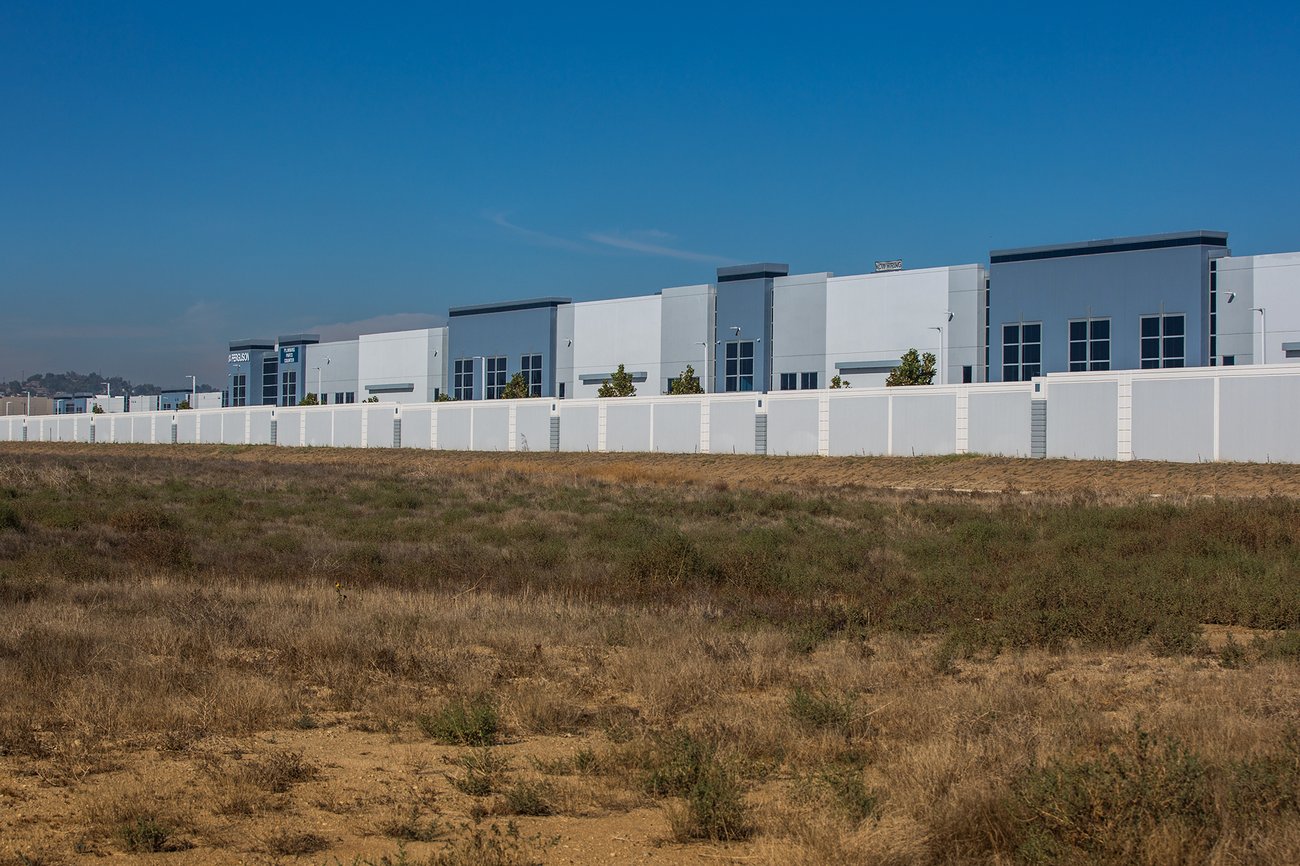
A warehouse located in Perris Valley on Nov. 17, 2021. Photo by George Rose, Getty Images |
|
|
|
|
The Riverside City Council’s recent unanimous rejection of a warehouse and industrial complex on the edge of the old March Air Force Base shows a shifting tide in the Inland Empire’s approach to the logistics industry, CalMatters’ contributor Jim Newton wrote.
The project highlighted the tension between seeking the economic growth promised by warehouse developers and minimizing the projects’ harm to nearby neighborhoods. Residents attending the council meeting jeered at the developer, Meridian Park West, as its representatives pledged to control congestion and create jobs at a proposed 3 million-square-foot warehouse space. Some residents noted that they already deal with snarled traffic and bad air. And the jobs? They would barely pay the rent, opponents said.
|
|
|
|
|
Advertisement |
 |
|
|
|
Palm Springs clinic bomber held anti-life beliefs |
|
|
|
|
|
A police line outside a damaged American Reproductive Centers fertility clinic after a bomb blast outside the building in Palm Springs on May 17, 2025. Photo by Gabriel Osorio, Getty Images |
|
|
|
|
After decades of attacks on reproductive health clinics by anti-abortion protestors, a bombing in Palm Springs exposed a different threat. A man who identified himself as a “nihilist” allegedly targeted a fertility clinic to oppose its role in creating life.
The deadly explosion Saturday killed one person — the suspected bomber, Guy Edward Bartkus, 25, of Twentynine Palms —and injured four people. It also sent debris flying for blocks.
FBI investigators called it an act of terrorism.
Online postings suggest the bomber acted on “‘pro-mortalist’ views, which argue that life should be ended as soon as possible because it only results in death, and ‘anti-natalism,’ the belief that having children is unethical because it only exposes more people to future suffering and death,” the Desert Sun reported.
Thanks for reading. While you are here, please sign up for the Inland Empire newsletter and let me know what kinds of stories you’d love to read.
And please add my email to your contacts: inlandempire@calmatters.org
|
|
|
|
|
|
|
|
Deborah Sullivan Brennan
Inland Empire Reporter |
|
|
|
|
|