|
|
|
A doctor speaks with a patient. Photo via iStock Photo |
|
|
|
|
Dear CalMatters reader,
The Inland Empire Health Plan kept $320 million that it should have given back to the federal government, a federal lawsuit claims.
IEHP is responsible for providing Medi-Cal to 1.6 million people throughout the Inland Empire—35% of Riverside and San Bernardino Counties’ combined population.
The complaint claims that IEHP committed fraud by putting money for the medical care of new Medi-Cal patients towards non-medical expenses or the care of existing patients. |
|
|
|
|
Our nonprofit, nonpartisan newsroom depends on support from people like you. |
|
|
|
|
The suit also alleges that IEHP created bonus programs for regional health systems using the Medi-Cal expansion money, and used the federal money as a bargaining chip to negotiate better care rates for people with IEHP insurance.
The agency ended up giving the federal government $30 million back. The complaint charges the final sum of falling $320 million short.
“Today’s lawsuit against IEHP shows our steadfast commitment to hold accountable insurers that brazenly compromise the Medicaid system,” said Acting United States Attorney Bill Essayli. “We will take every measure to restore integrity and accountability to the Medicaid system and ensure that patient care – not financial gain – is the primary focus of our health care system.”
The agency’s attorney, Winston Chan of Gibson, Dunn & Crutcher, wrote in an emailed statement that the benefits paid through the program were already approved by regulators.
“The allegations are a brazen attempt at revisionist history that is not only wrong as to the facts and law, but also particularly galling in light of the federal government’s wider attacks on state Medicaid funding,” he wrote.
The federal government gave IEHP funds to expand Medi-Cal from Jan. 1, 2014 to June 30, 2016, according to the suit. At least 85% of the funding was intended to pay for the initially high costs of providing healthcare to the newly insured. Any funding from the program not used for those medical costs would have to be paid back to the federal government, the suit says. The complaint claims that IEHP committed fraud by putting the money towards non-medical expenses or the care of people already covered by Medi-Cal.
“Every MCE dollar that IEHP improperly spent on ineligible expenses—such as other patient populations, consultants, or lawyers—was effectively an extra dollar in IEHP’s pocket because IEHP did not have to spend money from its general budget,” the suit says.
The agency spent $50 million of the funds to attempt to create a health record system for the geographic area served by the IEHP, the suit said. Instead of paying the company, Huron Consulting Group, directly with the funds, IEHP administrators paid providers, who then paid Huron, the complaint said.
The complaint cited an email from former IEHP’s Chief Executive Officer Bradley Gilbert:
“The funds have to flow through the two county hospitals from IEHP so I can get credit for them as medical costs or the dollars go back to the state. So we will have to set it up so that IEHP pays the hospitals and then the money is used for the data integration effort,” the email said.
A June 3, 2015, email from Gilbert, included in the complaint, discussed the difficulty of spending all the money from the government.
“I will have to distribute hundreds of millions of dollars beyond actual medical costs,” the complaint quotes Gilbert.
|
|
|
|
CRC inmates speak on conditions at Norco prison
|
|
|
|
|
|
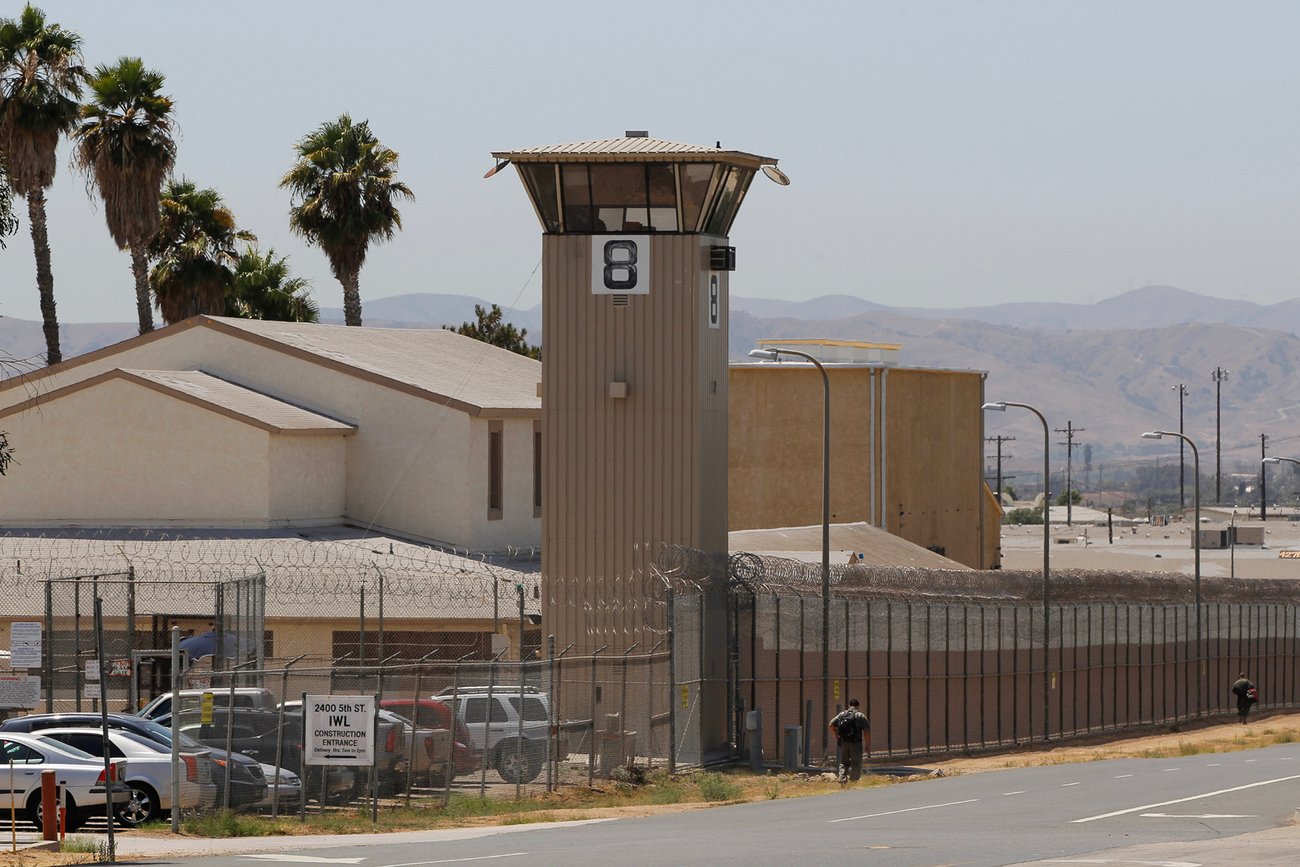
The California Rehabilitation Center, CRC Men's jail in Norco in 2012. Photo by Damian Dovarganes, AP Photo |
|
|
|
|
I reported last week on correctional officers’ requests to keep the Correctional Rehabilitation Center (CRC) in Norco open, and to alleviate overcrowding in county jails by walking back California’s 14-year-old policy of housing some convicted defendants in jails.
Immediately following the article, California Department of Corrections and Rehabilitation Spokesperson Terri Hardy provided comment on the reason the prison was chosen.
“CRC has older, wooden facilities and would require significant infrastructure investment to update structures that are in disrepair. Uneven terrain at the prison limits the prison’s ability to house incarcerated persons with American with Disabilities Act (ADA) needs. CDCR is a defendant in several class action lawsuits related to provisions of the ADA, medical, developmentally disabled and mental health services. CDCR is legally required to provide appropriate housing and services under these actions. Additionally, CRC’s population – primarily lower-level incarcerated people with less than ten years to serve – are more easily relocated,” Hardy wrote.
|
|
|
|
|
Advertisement |
 |
|
|
|
|
I was also contacted by Brian Kaneda, Deputy Director of Californians United for a Responsible Budget. CURB is a coalition of 80 organizations that works to close prisons, reduce the number of people in the prison system and increase community investments. Kaneda was adamant that AB 109 was not the primary driver of jail overcrowding, instead pointing to a sheriff’s discretion to hold pretrial defendants and a lack of mental health beds for pretrial diversion.
Kaneda connected me with two inmates at the Norco prison. Matthew Witecki, who has spent time in six prisons, said the Norco facility is dilapidated, and that he’s glad to see it close.
“I would say this is the hardest time that I’ve done, out of all the facilities,” Witecki said by phone.
The CRC has cockroaches, mold, leaks, lead paint and asbestos in pipes, he said. The inmate housing does not have air conditioning, and temperatures get up to 115 degrees in the summer, he said. He is housed in a warehouse built in the 1990’s, but the majority of inmates live in the old barracks.
He said that placing non-violent offenders in county jails prevented them from being shaped by prison culture—but that they should not have been incarcerated to begin with.
A second inmate, Richard, asked not to use his last name until he was transferred out of the CRC on Thursday.
“The kitchen, the cooking area, there are cockroaches. There are so many rodents in here. There are rat traps everywhere. There is no AC for any of the barracks we live in,” Richard said.
He said that he has been restricted from using the yard due to his involvement in the prison’s education system. When not in school, he says, he has to spend his days with 99 other inmates in the barracks, sharing two urinals and five toilets.
He compared the experience to people living in the Superdome following Hurricane Katrina: “It was not a place people were intended to be living,” he said.
|
|
|
|
Ontario gains new minor league team
|
|
|
|
|
|
Diamond Baseball Holdings CEO Peter Freund speaks at the Tower Buzzers’ name announcement in Ontario’s Town Square on Sept. 18, 2025. From left to right, Chaffee High School baseball players Jayden Tapia, David Garcia and Emilio Alcalá model the team’s new uniforms. Photo by Aidan McGloin, CalMatters |
|
|
|
|
The Ontario Tower Buzzers will be Ontario’s newest minor-league baseball team, starting next season as the Los Angeles Dodgers’ Triple-AAA affiliate.
The Tower Buzzers will be the main attraction of the city’s new sports complex, with 190 acres of athletic facilities. The complex will be home to 20 fields, 14 youth baseball diamonds, eight full-size diamonds, four football fields and two championship diamond fields. The city expects the complex to bring in 1.2 million new visitors, $62 million in spending, $1.5 million in new tax revenue and 610 new jobs.
“You know, when the Buzzers take the field in 2026, you’ll have the unique opportunity of seeing the future Los Angeles Dodgers star player here, and that is something that every community in California would love to be able to have,” said Peter Freund, CEO of Baseball Diamond Holdings, which owns the Tower Buzzers.
While you are here, please sign up for the Inland Empire newsletter and let me know what kinds of stories you’d love to read. And please add my email to your contacts: inlandempire@calmatters.org |
|
|
|
|
|
|
|
|
|
Aidan McGloin
Inland Empire Reporter |
|
|
|
|
|