Sacramento takes on insurance issues
|
|
|
|
|
|
Tony Iagmin holds a three-month-old baby he and his spouse, Sara Iagmin, are fostering at their home in San Diego’s Lakeside neighborhood on Feb. 23, 2026. The couple has worked with Angels Foster Family Network, a foster family agency, since 2013 and has fostered several children over the years. Photo by Adriana Heldiz for CalMatters |
|
|
|
|
Assemblymember James Ramos (D-Highland) has been focusing on the state’s insurance issues lately. On Feb. 19, Ramos wrote a letter to Assemblymember Corey Jackson (D-Moreno Valley) asking for $30 million in one-time funding to stabilize 200 foster family agencies. The agencies, which recruit and train foster parents, have been facing rising insurance costs. An insurance carrier that covered 90% of them stepped away from coverage, CalMatters’ Cayla Mihalovich reported last week.
The state awarded $31.5 million to these agencies last year, but the funds have run out. Ramos wrote that the state has explored creating a risk pool, adapting the state-managed FAIR Plan model, offering tax incentives to insurers, or reforming civil liability. None of those options have panned out yet, and these agencies need more time, he wrote.
“Without meaningful intervention, the convergence of these pressures threatens provider stability, placement capacity, and ultimately access to care for children and youth in the foster system,” Ramos wrote.
Read CalMatter’s full story on the crisis: California’s foster care system is buckling under the weight of this unexpected cost.
|
|
|
|
|
Our nonprofit, nonpartisan newsroom depends on support from people like you. |
|
|
|
|
On March 13, Ramos, Jackson and Insurance Commissioner Ricardo Lara met to focus on insurance issues for the Assembly Select Committee on Native American Affairs. Ramos said that he was determined to include indigenous voices in state insurance discussions, to mitigate the effects of California's native relocation and reservation policies. The hearing, on the Barona Reservation and with multiple tribal leaders giving testimony, was the second ever held on tribal land, according to Assemblymember Pilar Schiavo (D-Santa Clarita).
“It was California's policies, California's culture that forced people into these lands. And with that, calls for a responsibility, a moral obligation to help to mitigate the issues that they are all facing,” said Jackson.
The recurring theme among speakers: the state-managed California FAIR Plan is raising premiums.
“Tribal leaders have shared stories as you heard of premiums doubling or tripling, non renewals with no explanation, insurers refusing to recognize tribal mitigation, delays caused by misunderstanding of tribal's jurisdiction. These are not isolated incidents. They reflect a systematic market failure,” said Lara, the insurance commissioner. |
|
|
|
|
Did someone forward you this email? Sign up for The Inland Empire. |
|
|
|
|
Lara said insurance companies have less accurate data about tribal lands, resulting in miscalculations.
Lara touted the Sustainable Insurance Strategy, a new reform from his office, Assembly Bill 1680, which would establish civil penalties if the FAIR Plan Association violates its statutes, and Senate Bill 876, which would require insurers to pay the cash value of destroyed structure rather than the cost to repair the damaged structure.
“As insurers return to high risk areas under the sustainable insurance strategy, AB 1680 creates a smoother transition for homeowners to move off the fair plan and back into the admitted market,” Lara said. |
|
|
|
Hemet denies warehouse project |
|
|
|
|
|
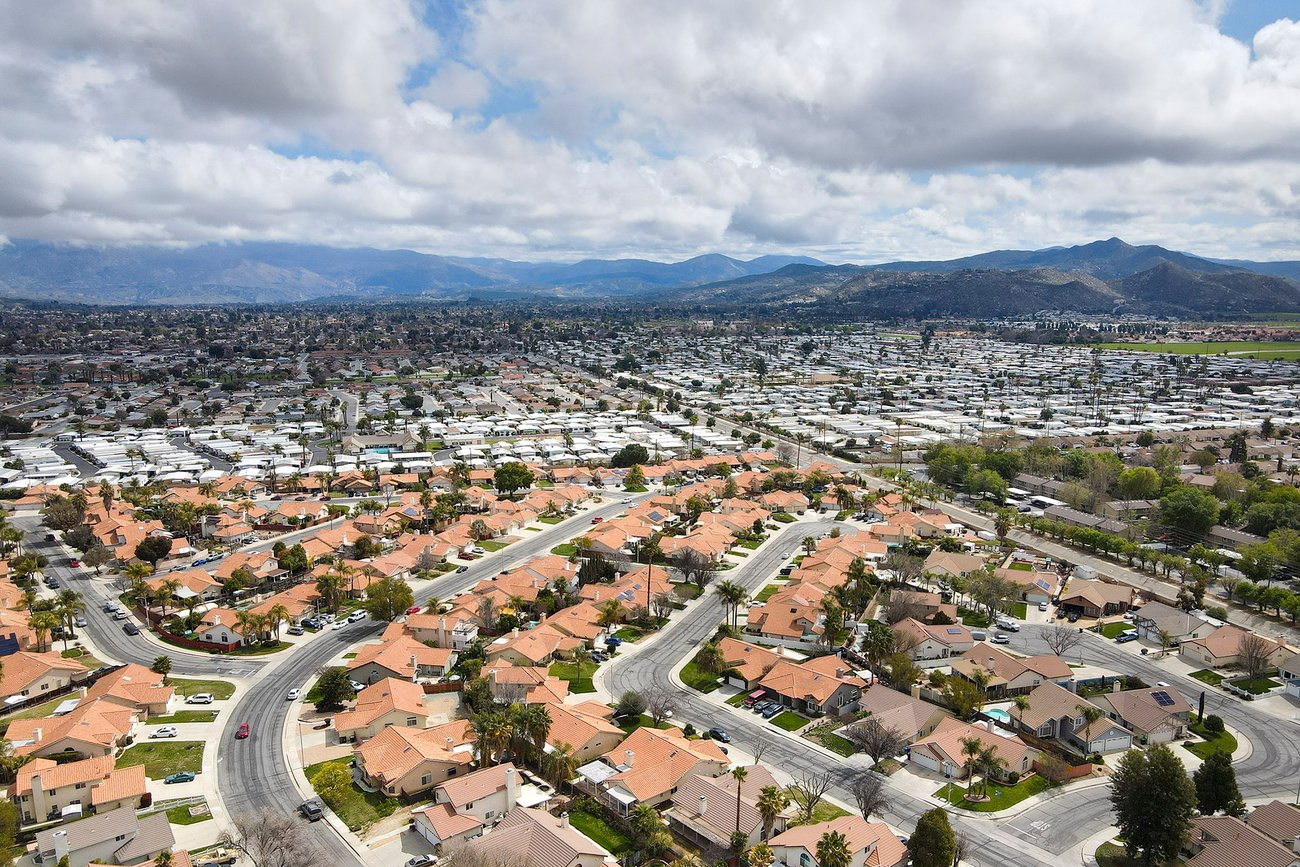
Aerial view of Hemet city during a cloudy day in the San Jacinto Valley in Riverside County. Photo by Thomas De Wever, Getty |
|
|
|
|
Hemet City Council voted 2-1 on March 10 against approving a development that experienced a rare fourth hearing following the developer’s threat to sue against alleged councilmember bias.
The development would have built a 883,000 square foot warehouse with 144 dock doors. The project would be built directly north of Diamond Valley Lake on what is now 73 acres of farmland. The city estimated the project to directly create 400 full-time equivalent jobs.
“From the very beginning, I was concerned about traffic, and I was concerned about real estate. I don’t know if I want to categorize it as third, but third is the air quality,” said Councilmember Jackie Peterson. “I just don’t know if it’s the right building for that location,” she said.
Developer Gregory Lansing said the project had been improved since it was first introduced, that the trucks would mostly be powered with clean energy, and that the warehouse would have resulted in better air quality by cutting down on the number of commuting residents. At peak traffic, three trucks would have come every hour, he said.
“Jobs is what the city needs with its 9% unemployment rate,” developer Gregory Lansing wrote by email following the decision. “Two Hemet Council members sided against the veterans, laborers and homeless and with the handful of seniors who have no legitimate beef,” he wrote.
Mayor Linda Krupa said that a better project could come along for the site.
“Do we need jobs? Absolutely. Do we need this kind of job? Questionable. Do I feel sorry for the young people who drive out of town for the same amount of money? Yes I do. I was in that position,” Krupa said.
Hemet city council had voted to deny the project on July 14. Lansing’s company threatened to sue the city, alleging council members were biased against the project. A Jan. 8 settlement agreement between Lansing’s company and the city resulted in the March 10 hearing, with two councilmembers abstaining.
“It has gone through environmental reviews, and has significantly revised this project based on input from this council and the public,” said Councilmember Joe Males at the July 14 hearing. Males voted for the project at each hearing. |
|
|
|
|
Advertisement |
 |
|
|
|
IE trucking educators respond to federal enforcement
|
|
|
|
|
|
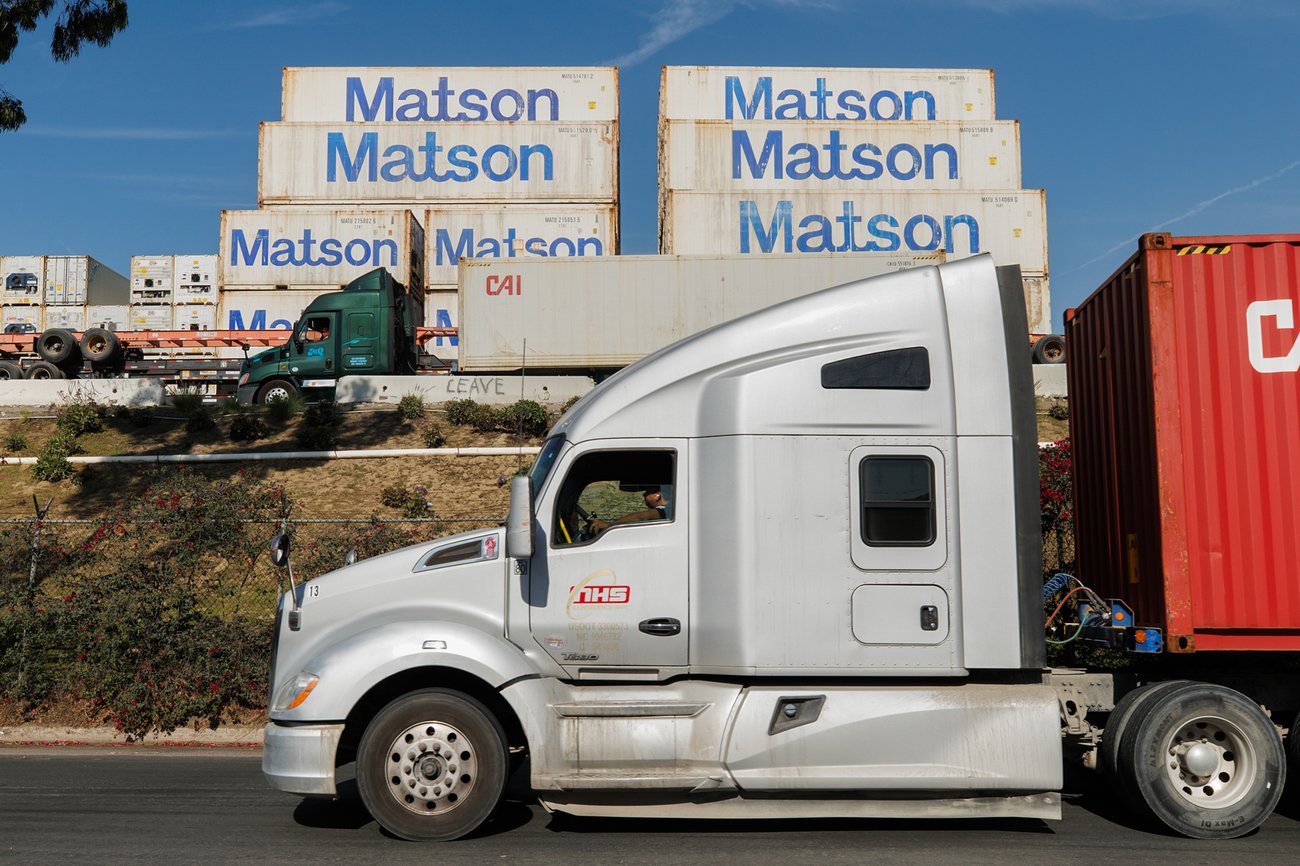
Commercial trucks pass by a warehouse in the Wilmington area of Los Angeles on Dec. 2, 2024. Photo by Carlin Stiehl for CalMatters |
|
|
|
|
California Department of Motor Vehicle’s large-scale cancellations of commercial driving licenses (CDLs) hit the California Sikh immigrant community hard, Gagandeep Singh reported for CalMatters. The issue comes from Transportation Secretary Sean Duffy’s threat to withhold funds if California did not enforce federal licensing rules. The federal rules require applicants to be English proficient and either a citizen or a lawful permanent resident.
“We have lost nearly $2 million in the last four months while paying $200,000 monthly to the bank and insurers for 35 parked trucks. The banks don’t wait,” a truck depot owner told Sing.
A tighter Transportation Department interpretation of the law, implemented on Monday, is causing the cancellation of 200,000 CDLs across the nation, the Washington Post reported March 16. The new interpretation bars asylum seekers, refugees and Deferred Action for Childhood Arrival recipients from obtaining licenses as well.
Several trucking schools in the Inland Empire that catered to immigrants have faced financial difficulty due to the changes, said Brad Lawrence, executive vice president and chief academic officer of trucking school SPCDL. Lawrence declined to name them, but said that SPCDL isn’t affected by a decline in applicants because they’ve always self-enforced the federal rules.
“Many schools don’t follow (federal requirements), and they teach in other languages, or (English as a second language). That in itself isn’t wrong. I understand that this nation is built on immigrants and immigration. But when the federal rules require that you read and speak English, that doesn’t help the drivers. Sure, it gets them licensed. But it doesn’t help them follow federal law,” said Lawrence.
Adwin Marroquin, manager at SoCal Trucking School, said business has been bad the last two years regardless of the conflict between the state and the federal government. This year, they’ve gotten a couple more students.
“It’s just the economy, there’s no work,” Marroquin said.
Two Inland Empire Sikh-focused driving schools did not respond to calls. |
|
|
|
|
|
|
|
|
|
Aidan McGloin
Inland Empire Reporter |
|
|
|
|
|