CA groups seek local taxes to offset federal health care cuts
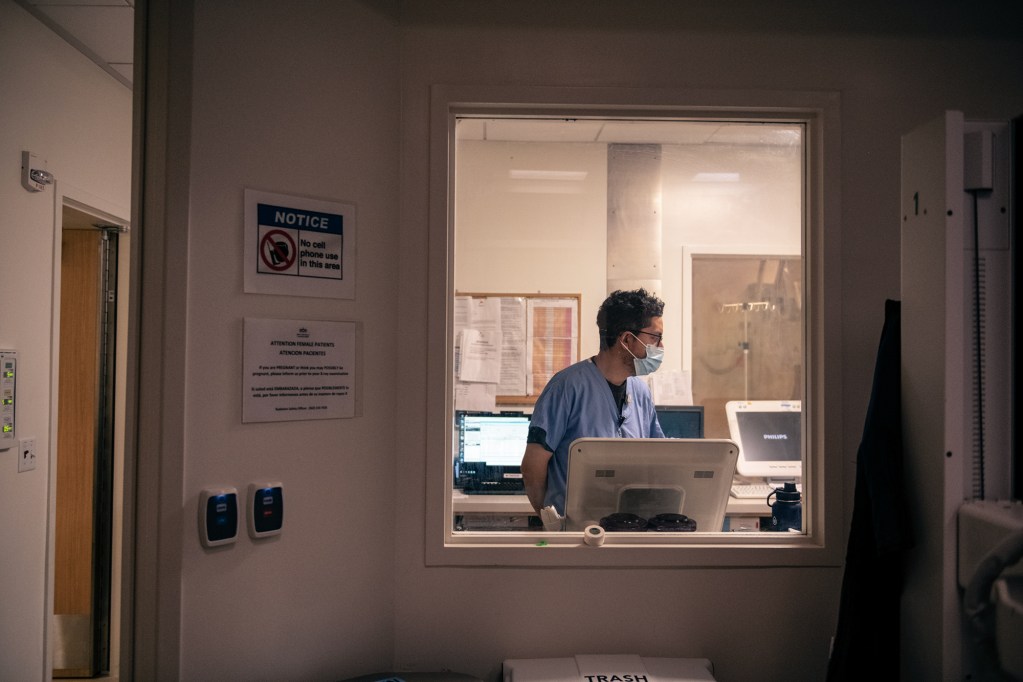
The imaging room at the Martin Luther King Jr. Community Hospital in Los Angeles on July 26, 2022. Photo by Pablo Unzueta for CalMatters
Would raising a county sales tax help local residents stave off federal health care cuts? A coalition of health care organizations and workers say yes.
As CalMatters’ Ana B. Ibarra explains, Restore Healthcare for Angelenos is pushing to place a measure on the June ballot that would ask Los Angeles County voters to decide whether the county could impose a half-cent sales tax through 2031. The money would go toward helping residents pay for primary and emergency care, as well as behavioral health needs for people who have lost their Medi-Cal coverage.
The coalition says the proposal would raise about $1 billion a year, and it’s working with Supervisor Holly Mitchell to present the motion to the county.
Mitchell, in an emailed statement: “This option is on the table because what’s at stake are safety net services unraveling for millions of residents. … This is a last resort option for the times we’re facing.”
The board is expected to vote on the proposal next month. If it rejects putting the initiative before voters in June, the coalition will try for the November ballot.
The proposal is one of a handful of initiatives seeking money to offset federal cuts. In November voters in Santa Clara County approved a similar sales tax hike, and as pressure mounts on Gov. Gavin Newsom and the Legislature for a statewide solution, some progressives and unions are pushing for a proposed billionaires tax to help backfill funds.
The sweeping federal spending plan President Donald Trump signed last summer cuts nearly $1 trillion from Medicaid over 10 years to help counteract Trump’s 2017 tax cuts that mostly benefit the wealthy. The state stands to lose $30 billion a year in federal funding and an estimated 3.4 million Californians are at risk to lose their Medi-Cal coverage over the next several years, according to state health officials.
CalMatters events: Mi Escuelita, a San Diego preschool, is transforming how young children recover from trauma. Join our event on Feb. 5, in person in Chula Vista or virtually, to hear from California leaders in trauma-informed care about what works, what it takes to sustain it and how policymakers can expand these programs. Register today.
What should justice look like in California today? Join us in L.A. or virtually on Feb. 25th for a conversation with L.A. County District Attorney Nathan Hochman, former CDCR Director Dave Lewis and Heidi Rummel of the Post-Conviction Justice Project, on prosecution, incarceration and whether reform or tougher policies will define the state’s future. Register here.
Advertisement
Other Stories You Should Know
Tech giants’ concerning internal conversations
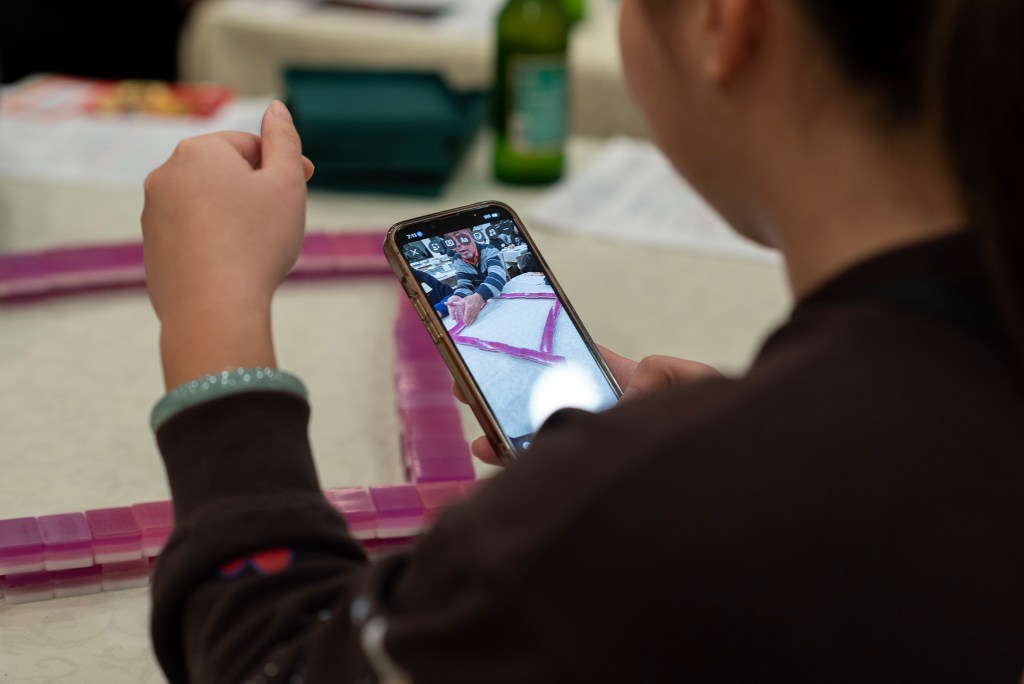
A child takes a photo to upload to Instagram during a community event in San Francisco on Feb. 22, 2024. Photo by Laure Andrillon for CalMatters
Two lawsuits playing out in federal and state courts are accusing Meta, Google and other tech companies of their social media sites being purposefully designed to hook young users, leading to mental health risks, writes CalMatters’ Colin Lecher.
Though the two cases differ slightly, both share a similar core argument that social media executives — despite knowing about the potentially harmful effects their products could inflict on children and teens — marketed their products to these users.
Throughout litigation, the cases have revealed illuminating internal conversations at the companies. In a 2016 email from Mark Zuckerberg, for example, the Meta CEO wrote that “if we tell teens’ parents about their live videos, that will probably ruin the product from the start.”
Defendants in the federal lawsuit argued during a hearing this week that a judge should dismiss the case, and a decision on that motion will likely be handed down in the next few weeks. Meanwhile, the related state lawsuit went to jury selection this week. TikTok and Snap have reportedly reached undisclosed settlements with the plaintiff, an unnamed Californian who said their addiction to social media damaged their mental health, though Meta and Google are continuing as defendants.
Sacramento County Sheriff's deputies in Sacramento on Feb. 28, 2022. Photo by Rahul Lal, Sipa USA via Reuters
The California Supreme Court issued a ruling Thursday saying that loose marijuana in a car does not violate the state’s open container laws and does not give police the right to search a vehicle, reports CalMatters’ Nigel Duara.
The suit stems from a Sacramento case where police officers stopped a car and spotted a joint-rolling tray in the vehicle. The police then searched the car and found 0.36 grams of marijuana crumbs on the floorboards of the backseat. The driver was not driving erratically, had no issues with their registration or license and had no warrants out.
In its ruling, the high court said marijuana in a car must be in “imminently usable condition,” such as being already rolled in a joint, to be considered a violation. Loose marijuana on a car’s floorboards, however, is more akin to spilled beer, according to the court. The court also rejected law enforcement’s argument that the driver’s nervousness and possession of a rolling tray was enough reason to search the car.
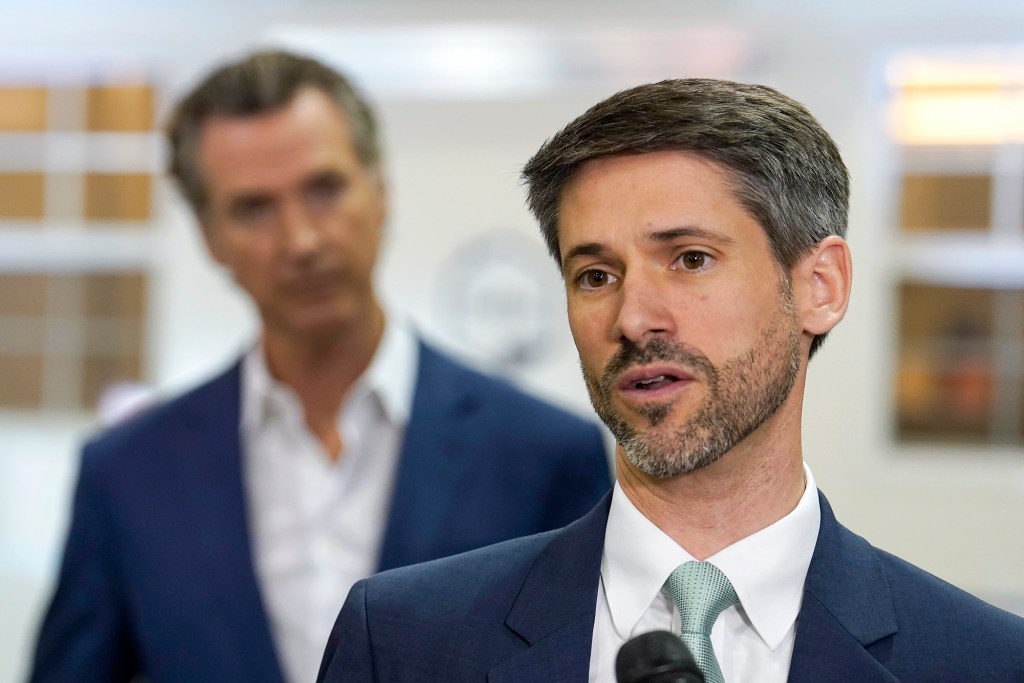
San Jose Mayor Matt Mahan (right) discusses homelessness during Newsom’s tour of the state in Sacramento on March 16, 2023. Photo by Rich Pedroncelli, AP Photo
On Thursday the mayor of San Jose unveiled his candidacy for California governor. Matt Mahan, a moderate Democrat and former tech entrepreneur, was a supporter of the anti-crime measure Proposition 36 and put forward a plan enabling the city to arrest unhoused people if they refuse multiple offers of shelter. Read more from CalMatters’ Jeanne Kuang.
Advertisement
California Voices
CalMatters columnist Dan Walters: San Jose Mayor Mahan and former L.A. Mayor Antonio Villaraigosa are probably the most centrist gubernatorial candidates, and the outcome of their campaigns will be a litmus test of just how left-of-center California truly is.
California’s lack of investment in private duty nursing, a service designed to keep vulnerable patients safe at home and out of expensive hospitals, has forced many nurses to leave the field, writes Jarrod DePriest, president and CEO of Maxim Healthcare.
Advertisement
Other things worth your time:
Some stories may require a subscription to read.
Trump is winning his water tug-of-war with Newsom // Politico
Heated debate over CA water plan as environmentalists warn of ‘ecosystem collapse’ // Los Angeles Times
Why CA’s fight over ticket fraud has become a proxy war against Ticketmaster and Live Nation // Los Angeles Times
DHS confirms Super Bowl security role amid fears of ICE enforcement // The Mercury News
Trump administration demands SJSU apologize for transgender volleyball player // San Francisco Chronicle
Is Huntington Beach’s voter ID law finished? // Voice of OC
UCLA medical school uses a ‘systemically racist approach’ to admissions, DOJ alleges // Los Angeles Times